A toothache can be easy to ignore at first, especially if the discomfort comes and goes. However, when tooth pain becomes persistent, or your tooth becomes sensitive to hot and cold foods, it could be a sign of a deeper problem. Many people wonder whether their symptoms will improve on their own or if they need professional treatment. In some cases, these symptoms may indicate that the soft tissue inside the tooth has become infected or damaged, making root canal treatment the best option to save the tooth.
At South Trail Crossing Dental in SE Calgary, we believe that understanding the warning signs can help you seek treatment before the problem becomes more serious. Root canal treatment is designed to remove infection, relieve discomfort, and preserve your natural tooth whenever possible. Knowing when to visit your dentist can make a significant difference in protecting your oral health.
What Is a Root Canal?
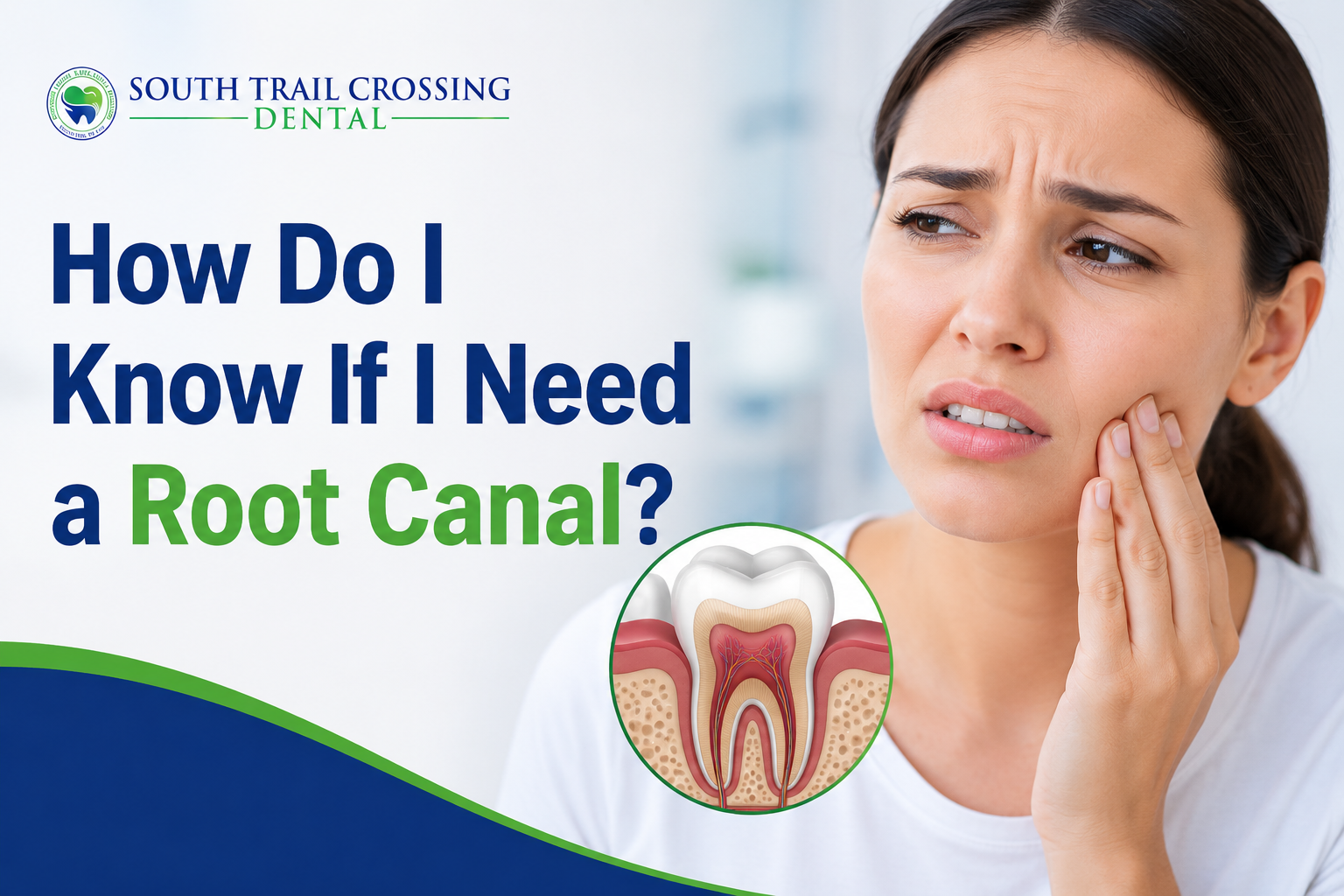
A root canal is a dental procedure that treats infection or damage inside the tooth. Beneath the hard outer layers of every tooth is a soft tissue called the pulp. This tissue contains nerves, blood vessels, and connective tissue that help the tooth develop during its early stages.
When the pulp becomes infected because of deep decay, a cracked tooth, repeated dental procedures, or trauma, it cannot heal on its own. Without treatment, the infection may spread beyond the tooth and lead to severe pain, swelling, or tooth loss. Root canal treatment removes the damaged tissue, cleans the inside of the tooth, and seals it to prevent future infection.
Common Signs You May Need a Root Canal
Not every toothache requires a root canal, but certain symptoms should never be ignored. Recognizing these warning signs early allows your dentist to diagnose the problem before it worsens.
Persistent Tooth Pain
Ongoing tooth pain is one of the most common reasons patients seek dental care. The discomfort may be constant or may come and go throughout the day. Some people notice pain while chewing, while others experience discomfort even when the tooth is not being used.
Pain that continues for several days or becomes more intense over time often indicates that the nerve inside the tooth has been affected. Although only a dental examination can confirm the cause, persistent pain should always be evaluated promptly.
Sensitivity That Does Not Go Away
Many people experience occasional sensitivity to hot or cold foods. However, if the pain lingers long after the temperature has been removed, it may be a sign that the pulp inside the tooth has become inflamed or infected.
This type of sensitivity often becomes more noticeable over time. Drinks such as coffee, tea, ice water, or even cold air may trigger discomfort that lasts for several minutes instead of disappearing quickly.
Pain While Chewing
If biting down on food causes sharp or aching pain, your tooth may have damage that extends beneath the surface. Infection inside the tooth can increase pressure around the root, making chewing uncomfortable.
Pain during eating should not be dismissed as a temporary issue. Your dentist can determine whether the discomfort is caused by a cracked tooth, infection, or another dental condition requiring treatment.
Swollen or Tender Gums
Healthy gums should feel firm and comfortable. Swelling, tenderness, or a small bump near a painful tooth may indicate that infection has spread beyond the tooth into the surrounding tissues.
In some cases, the swelling may decrease temporarily before returning later. Even if the discomfort improves, the infection remains and should be treated as soon as possible.
Tooth Discoloration
A tooth that gradually becomes darker than the surrounding teeth may indicate damage to the pulp inside. Internal injury can reduce blood flow to the tooth, causing it to appear gray, brown, or darker than normal.
Although discoloration does not always mean a root canal is necessary, it is an important sign that should be professionally evaluated.
What Causes a Tooth to Need a Root Canal?
Several dental problems can allow bacteria to reach the inner portion of the tooth. Once the pulp becomes infected, treatment is necessary because the damaged tissue cannot repair itself.
Common causes include:
- Deep cavities that extend into the pulp.
- Cracked or fractured teeth.
- Dental injuries from sports or accidents.
- Large fillings that weaken the tooth over time.
- Untreated decay that continues to spread.
Good oral hygiene and regular dental checkups can reduce the risk of these problems, but even well-maintained teeth may sometimes require root canal treatment following an injury.
Can a Tooth Heal Without a Root Canal?
Many patients hope the pain will disappear without treatment. While discomfort may lessen temporarily, this does not necessarily mean the infection has healed.
As the nerve tissue inside the tooth becomes more damaged, pain may actually decrease because the nerve is no longer functioning normally. Unfortunately, the infection can continue spreading into the surrounding bone and gums without causing obvious symptoms. Waiting too long may reduce the chances of saving the natural tooth.
Prompt diagnosis allows your dentist to treat the problem before more extensive treatment becomes necessary.
How Does Your Dentist Determine If You Need a Root Canal?
Diagnosing the need for a root canal involves more than simply asking about your symptoms. At South Trail Crossing Dental in SE Calgary, we perform a complete examination to identify the exact source of your discomfort.
Your appointment may include:
A Detailed Clinical Examination
Your dentist will examine the affected tooth, surrounding gums, and nearby teeth to look for signs of infection, cracks, swelling, or decay.
Digital Dental X-Rays
Dental X-rays provide valuable information about the roots and surrounding bone. They help detect infection, bone loss, hidden decay, and changes that cannot be seen during a visual examination.
Sensitivity and Bite Testing
Your dentist may gently test how your tooth responds to temperature or light pressure. These tests help determine whether the pulp remains healthy or has become permanently damaged.
Together, these evaluations allow your dentist to recommend the most appropriate treatment based on your individual condition.
What Happens During Root Canal Treatment?
Many patients feel anxious because they have heard outdated stories about root canals. Modern root canal treatment is designed to relieve pain rather than cause it.
After numbing the area, your dentist creates a small opening in the tooth to access the infected pulp. The damaged tissue is carefully removed, and the inside of the tooth is thoroughly cleaned and disinfected. Once the canals are prepared, they are sealed with a special filling material to prevent bacteria from returning.
Depending on the condition of the tooth, a dental crown may be recommended afterward to restore strength and protect the tooth during everyday use.
Is It Better to Save the Natural Tooth?
Whenever possible, preserving your natural tooth is usually the preferred option. Your natural teeth help maintain proper chewing function, support the surrounding teeth, and preserve the alignment of your bite.
Root canal treatment allows many patients to keep a tooth that might otherwise require extraction. Saving the natural tooth also helps maintain the jawbone and often reduces the need for more complex tooth replacement procedures in the future.
What Happens If You Delay Root Canal Treatment?
Ignoring an infected tooth rarely solves the problem. Over time, bacteria may continue spreading into the surrounding bone and nearby tissues. This can increase pain, cause swelling, and eventually result in an abscess.
As the infection progresses, treatment may become more complicated, and the tooth may no longer be repairable. Seeking treatment early often provides a simpler solution and improves the likelihood of preserving your natural tooth.
How Can You Reduce the Risk of Needing a Root Canal?
Although not every root canal can be prevented, healthy daily habits significantly lower the risk of serious tooth infections.
Brushing twice each day with fluoride toothpaste, flossing daily, limiting sugary foods and drinks, and attending regular dental examinations help identify small problems before they become larger ones. Wearing a custom mouthguard during sports also protects teeth from injuries that may damage the pulp.
Preventive dental care remains one of the most effective ways to maintain healthy teeth throughout your life.
Trust South Trail Crossing Dental in SE Calgary for Root Canal Treatment
If you have ongoing tooth pain, lingering sensitivity, or swelling around a tooth, do not ignore the symptoms. Early diagnosis allows problems to be treated before they become more serious and helps improve the chances of saving your natural tooth. If your symptoms are not improving, contact South Trail Crossing Dental in SE Calgary to schedule an appointment.
At South Trail Crossing Dental in SE Calgary, our experienced team provides compassionate root canal treatment using modern techniques focused on your comfort and long-term oral health. We take the time to explain every step of your treatment, answer your questions, and create a personalized care plan based on your needs.
If you think you may need a root canal in SE Calgary, schedule an appointment with South Trail Crossing Dental today. A professional examination can provide the answers you need and help restore your smile before the problem progresses further.
Contact us for more information.

South Trail Crossing Dental clinic, the dentist near you, delivers a different dentistry that is based on our THREE core philosophies – providing best possible dental care to all our patients, treating each patient as a unique individual with unique needs, and providing integrated treatment addressing simultaneously oral health and systemic or overall health.