Losing one or more teeth is more common than most people think — and the decision about how to replace them is one of the most important choices you will make for your long-term oral health. Two of the most popular tooth replacement options are dental implants and dentures. Both restore your smile and ability to chew, but they work very differently, carry different costs, and suit different lifestyles.
What Are Dental Implants?
A dental implant is a small titanium post surgically inserted into your jawbone to act as an artificial tooth root. Once the implant fuses with the bone — a process called osseointegration — a custom-made crown is placed on top, creating a replacement tooth that looks, feels, and functions just like a natural one.
Implants can replace a single missing tooth, multiple teeth, or even support a full arch of teeth (known as All-on-4 or implant-supported dentures).
Key features of dental implants:
- Permanent, fixed solution
- Look and feel like natural teeth
- Stimulate the jawbone to prevent bone loss
- Do not require adhesives or removal
- Can last 20+ years with proper care
Read more : Dental Implants: The Ultimate Guide to Replacing Missing Teeth
What Are Dentures?
Dentures are removable appliances custom-made to replace missing teeth and the surrounding gum tissue. There are two main types:
- Complete dentures — replace a full arch of missing teeth (upper, lower, or both)
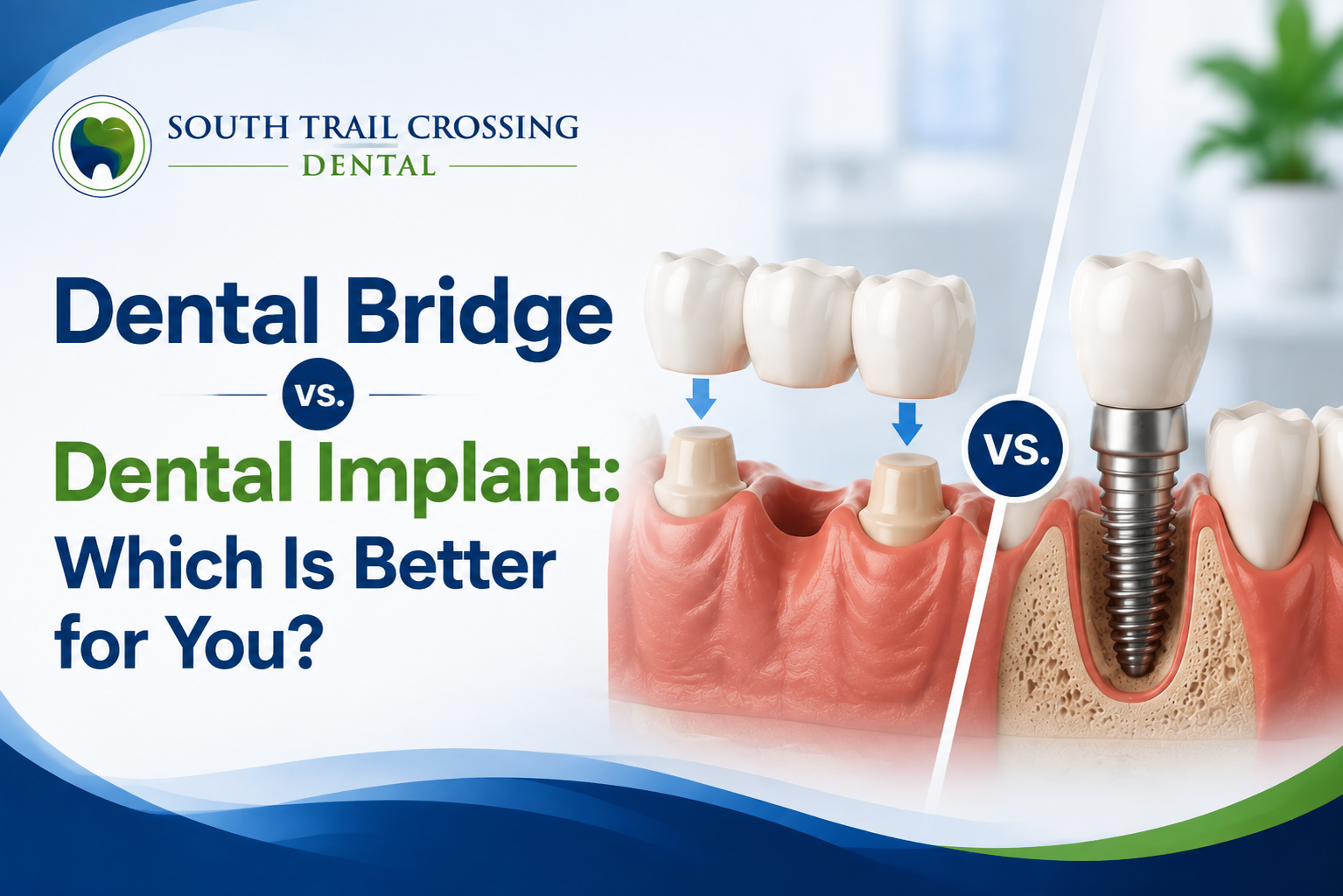
- Partial dentures — fill in gaps when some natural teeth remain similar induction to dental bridges
Modern dentures are crafted from high-quality acrylic, nylon, or metal and are designed to closely resemble natural teeth. However, they sit on top of the gums and rely on suction, adhesive, or clasps for stability rather than being anchored to the jawbone.
Key features of dentures:
- Removable and non-surgical
- More affordable upfront
- Suitable for patients with bone loss or multiple missing teeth
- Require daily removal and cleaning
- May need adjustments or replacement every 5–8 years
Dental Implants vs. Dentures: Side-by-Side Comparison
| Feature | Dental Implants | Dentures |
| Procedure | Surgical | Non-surgical |
| Stability | Fixed & permanent | Removable |
| Bone preservation | Yes — stimulates bone | No — bone loss continues |
| Comfort | Like natural teeth | May shift or cause soreness |
| Maintenance | Brush & floss normally | Daily removal & soaking |
| Lifespan | 20+ years | 5–8 years |
| Upfront cost | Higher | Lower |
| Long-term cost | Lower (fewer replacements) | Higher (replacements + adhesive) |
| Candidacy | Requires adequate bone & healthy gums | Suitable for most patients |
Which Option Is Better? 5 Factors to Consider
1. Your Bone Density
Dental implants require sufficient jawbone density to anchor the titanium post. If you have been missing teeth for a long time, bone loss may have occurred — which could require a bone graft before implants are possible. Dentures, on the other hand, rest on the gum surface and don’t require bone density, making them accessible for more patients.
2. Your Budget
Dentures typically have a lower upfront cost, making them attractive for patients with budget constraints. However, when you factor in replacement costs, dental adhesives, and adjustments over a decade, implants often become the more cost-effective option in the long run. Many dental clinics now offer 0% financing to make implants more accessible.
3. Your Lifestyle
If you lead an active lifestyle and want a solution you can forget about — one that won’t slip during meals, conversation, or laughter — dental implants are the clear winner. Denture wearers sometimes experience embarrassing slippage and need to avoid certain crunchy or sticky foods.
4. Your Age and Overall Health
Implant surgery, while straightforward, does require adequate healing time. Patients with uncontrolled diabetes, autoimmune conditions, or those who smoke heavily may face higher risks of implant failure. Your dentist will conduct a full health assessment before recommending implants. Dentures are typically suitable for a broader range of health conditions and age groups.
5. Number of Missing Teeth
For a single missing tooth, an implant is almost always the preferred solution. For patients who have lost most or all of their teeth, implant-supported dentures (a hybrid option) offer the stability of implants with the affordability of full-arch replacement — a popular middle ground.
The Middle Ground: Implant-Supported Dentures
Not ready to commit fully to individual implants? Implant-supported dentures offer an excellent compromise. Two to four implants are placed in the jaw to anchor a full denture in place. This eliminates the slippage and discomfort of traditional dentures while being more affordable than a full set of individual implants.
This option is particularly popular among patients who are replacing an entire arch of teeth and want significantly improved stability and confidence over conventional dentures.
What Do Dentists Typically Recommend?
Most dentists agree that dental implants are the gold standard for tooth replacement — when a patient is a suitable candidate. They preserve jawbone health, offer superior stability, and deliver the most natural result. The investment pays off significantly over time, both in oral health outcomes and quality of life.
That said, dentures remain a valid, life-changing solution for patients who cannot undergo surgery or need an affordable near-term fix. Modern dentures have come a long way and, when well-fitted and properly maintained, can provide excellent function and aesthetics.
The best path forward? A thorough consultation with your dentist — including a dental exam, X-rays, and a review of your medical history — will determine which option suits your bone structure, health, and goals. Patients covered by the Canadian Dental Care Plan (CDCP) may also find certain restorative treatments partially covered.
Frequently Asked Questions (FAQs)
Are dental implants painful?
The implant procedure is performed under local anaesthesia, so you won’t feel pain during the surgery. Mild soreness and swelling for a few days afterward is normal and manageable with over-the-counter pain relief. Most patients are surprised by how comfortable the experience is.
How long do dental implants last?
With proper brushing, flossing, and regular dental checkups, dental implants can last 20 to 25 years — and in many cases, a lifetime. The crown attached to the implant may need replacement after 10–15 years due to normal wear.
Can dentures be converted to implants later?
Yes. Many patients start with dentures and later transition to implant-supported dentures or individual implants as their budget allows. Your dentist can plan a long-term treatment roadmap that works with your financial situation.
Do dental implants look natural?
Absolutely. The crown placed on an implant is custom-shaded and shaped to match your surrounding teeth perfectly. Most people — including you — won’t be able to tell the difference between an implant and a natural tooth.
Will my dental insurance cover implants or dentures in Alberta?
Coverage varies by provider. Many Alberta dental insurance plans partially cover dentures. Implants are less commonly covered but may be included in some premium plans. Programs like the Canadian Dental Care Plan (CDCP) may cover certain restorative treatments for eligible patients. Ask your dental clinic to help you verify your benefits before committing to a treatment plan.
Final Thoughts
Choosing between dental implants and dentures is a personal decision that depends on your oral health, lifestyle, and financial situation. Both options have their place — and the right choice is the one that best aligns with your needs and long-term goals.
Contact us for more information.

South Trail Crossing Dental clinic, the dentist near you, delivers a different dentistry that is based on our THREE core philosophies – providing best possible dental care to all our patients, treating each patient as a unique individual with unique needs, and providing integrated treatment addressing simultaneously oral health and systemic or overall health.