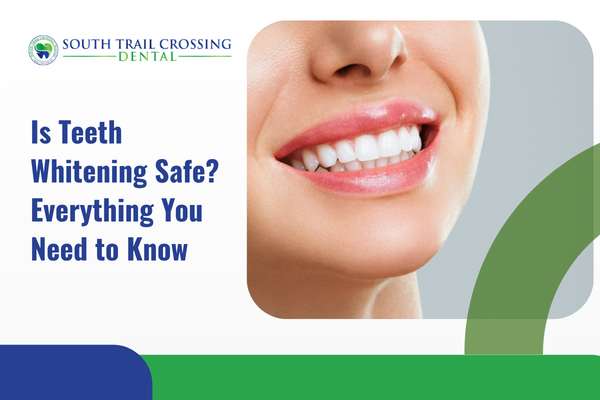
A bright, confident smile is one of the first things people notice — and it is no surprise that teeth whitening has become one of the most requested cosmetic dental treatments in Canada. From drugstore whitening strips to professional in-office bleaching, the options are everywhere. But before you reach for that whitening kit, one important question deserves a clear answer: is teeth whitening actually safe?
The short answer is yes — when done correctly and with appropriate guidance, teeth whitening is considered safe for most adults. The longer answer involves understanding how whitening works, who it is suitable for, and what risks to watch out for depending on the method you choose.
How Does Teeth Whitening Work?
Teeth whitening works by using a bleaching agent — most commonly hydrogen peroxide or carbamide peroxide — to break down and lift stain molecules embedded in the enamel and dentin layers of your teeth. These stains accumulate over time from coffee, tea, red wine, tobacco, and the natural aging process.
The concentration of the bleaching agent varies significantly between products. Professional dental treatments typically use higher concentrations applied under controlled conditions, while over-the-counter products contain lower levels designed for home use. The effectiveness and risk profile of each method differs accordingly.
Read more : Teeth Whitening: Is It Safe for Children?
Types of Teeth Whitening and Their Safety Profiles
Professional In-Office Whitening
Performed by a dentist or trained dental professional, in-office whitening uses prescription-strength bleaching agents — often between 25% and 40% hydrogen peroxide — combined with a protective barrier applied to your gums before treatment begins.
This is the safest and most effective approach. Your dental team can assess whether your teeth and gums are healthy enough for whitening, identify any existing sensitivity, and monitor the process throughout. Results are immediate and typically last longer than at-home alternatives. At South Trail Crossing Dental, our professional teeth whitening service is performed with exactly this level of care and supervision.
Dentist-Prescribed Take-Home Kits
Many dental clinics provide custom-fitted whitening trays paired with a professional-grade bleaching gel that patients use at home over one to two weeks. Because the trays are moulded to fit your exact tooth shape, the gel sits evenly on the surface without pooling on the gums — reducing the risk of irritation significantly.
This method is safe and effective when used as directed. It is a popular middle ground between in-office speed and at-home convenience.
Over-the-Counter Whitening Products
Whitening strips, gels, toothpastes, and rinses available in pharmacies contain lower concentrations of bleaching agents — typically between 3% and 10% hydrogen peroxide. While these are generally safe for healthy teeth, they carry a higher risk of misuse, uneven application, and gum contact, particularly when people use them more frequently or for longer than the packaging recommends.
Whitening toothpastes typically work through mild abrasives rather than bleaching, and while they can remove surface stains effectively, they do not change the natural colour of teeth.
Whitening Strips
Strips are one of the most widely used at-home options. They are convenient but can slip out of position and come into contact with the gums, which may cause temporary irritation. For people with sensitive teeth or gum recession, strips can worsen existing discomfort if used improperly.
What Are the Risks of Teeth Whitening?
Teeth whitening is well-studied and widely regarded as safe, but it is not without potential side effects. Being aware of them helps you make an informed decision.
Tooth Sensitivity
The most commonly reported side effect is temporary tooth sensitivity during and shortly after treatment. The bleaching agents temporarily open the microscopic pores in your enamel, making teeth more reactive to temperature changes. This usually resolves within a few days of completing treatment.
Using toothpaste formulated for sensitive teeth in the days before and after whitening can reduce discomfort significantly. Dentists may also apply desensitizing agents as part of in-office treatment.
Gum Irritation
If the bleaching agent comes into contact with gum tissue — particularly with ill-fitting trays or improperly applied strips — it can cause temporary redness, tenderness, or a white appearance on the gums. This typically resolves within a day or two without treatment. Patients with existing gum concerns should have a gum disease assessment completed before starting any whitening treatment.
Enamel Damage From Overuse
When used as directed, approved whitening products do not damage enamel. However, excessive use — applying products far more frequently than recommended in pursuit of faster results — can gradually weaken the enamel and increase sensitivity over time. More whitening does not mean better whitening, and rest periods between treatments are important.
Not Effective on All Stains or Restorations
Whitening agents work on natural tooth enamel only. Dental crowns, veneers, bonding, and fillings will not respond to bleaching, which can create uneven colouring if you have visible restorations. Some stains — particularly those caused by tetracycline antibiotics or fluorosis — also respond poorly to standard whitening treatments. Patients in this situation may benefit from exploring a smile makeover, which combines cosmetic treatments such as porcelain veneers to achieve a uniformly bright result.
Who Should Avoid Teeth Whitening?
While teeth whitening is safe for most adults, it is not appropriate for everyone. You should speak with your dentist before whitening if you:
- Are pregnant or breastfeeding
- Have untreated cavities, cracked teeth, or active gum disease
- Have significant enamel erosion or severe sensitivity
- Have visible dental restorations in your smile zone
- Are under the age of 18, as tooth development may still be ongoing
Addressing any underlying dental issues before beginning whitening treatment is always the right first step. A routine dental exam is the ideal starting point — it allows your dentist to identify any cavities, cracks, or gum concerns that need to be resolved before bleaching begins.
Tips for Whitening Safely and Effectively
Getting the best results while protecting your dental health comes down to a few key practices. Always consult a dental professional before starting any whitening treatment, particularly if you have sensitive teeth or existing dental work. Follow product instructions exactly — extending treatment time does not accelerate results, it increases risk. Avoid highly pigmented foods and beverages such as coffee, red wine, and tomato sauce in the days immediately after whitening, as pores in the enamel remain open and staining is more likely during this window. Finally, maintain your results with regular brushing, flossing, and professional dental hygiene cleanings — removing surface buildup consistently is the most effective way to extend the longevity of your whitening results.
Frequently Asked Questions
Is professional teeth whitening safer than store-bought products?
Yes. Professional whitening is performed or supervised by a dental professional who evaluates your oral health first, applies protective barriers to your gums, and uses concentrations appropriate for your specific situation. Store-bought products are generally safe when used correctly but carry a higher risk of misuse and uneven results.
How long do teeth whitening results last?
Results vary depending on the method used and your lifestyle habits. Professional in-office whitening can last between one and three years with proper care. At-home treatments tend to produce shorter-lasting results. Avoiding staining foods and beverages and maintaining good oral hygiene extends the longevity of your results significantly.
Can teeth whitening damage your enamel permanently?
When used as directed and not excessively, teeth whitening does not cause permanent enamel damage. Studies consistently show that approved peroxide-based whitening products are safe for enamel at recommended concentrations. The key is following instructions and allowing adequate rest periods between treatments.
Is teeth whitening safe during pregnancy?
It is generally recommended to avoid teeth whitening during pregnancy and breastfeeding as a precaution. While there is limited evidence of harm, the effects of bleaching agents on fetal development have not been extensively studied. Most dental professionals advise waiting until after pregnancy.
Why are my teeth sensitive after whitening?
Post-whitening sensitivity is a normal and common side effect. Bleaching agents temporarily increase the permeability of the enamel, making teeth more reactive to hot, cold, and sweet stimuli. Using a desensitizing toothpaste before and after treatment helps manage this, and the sensitivity typically fades within 24 to 72 hours.
At what age can someone start whitening their teeth?
Most dental professionals recommend waiting until the age of 18 before beginning whitening treatments. Before this age, the enamel and dental pulp are still developing, making teeth more vulnerable to sensitivity and irritation from bleaching agents.

South Trail Crossing Dental clinic, the dentist near you, delivers a different dentistry that is based on our THREE core philosophies – providing best possible dental care to all our patients, treating each patient as a unique individual with unique needs, and providing integrated treatment addressing simultaneously oral health and systemic or overall health.