Dental Crowns Near You in SE Calgary
What is a Dental Crown?
Most dentistry looks like dentistry. Our goal is to provide dentistry that is undetectable. We replace existing crowns and fillings with restorations that look and feel like your natural teeth.
Where damage to a person’s teeth is extreme, and apparently beyond repair, we can use porcelain or porcelain “pasted on metal” crowns to make the smile appear “as new”. This is an extremely reliable technique for repairing the most severe of dental problems, even permanently replacing missing teeth to offer a complete smile and a functional bite.
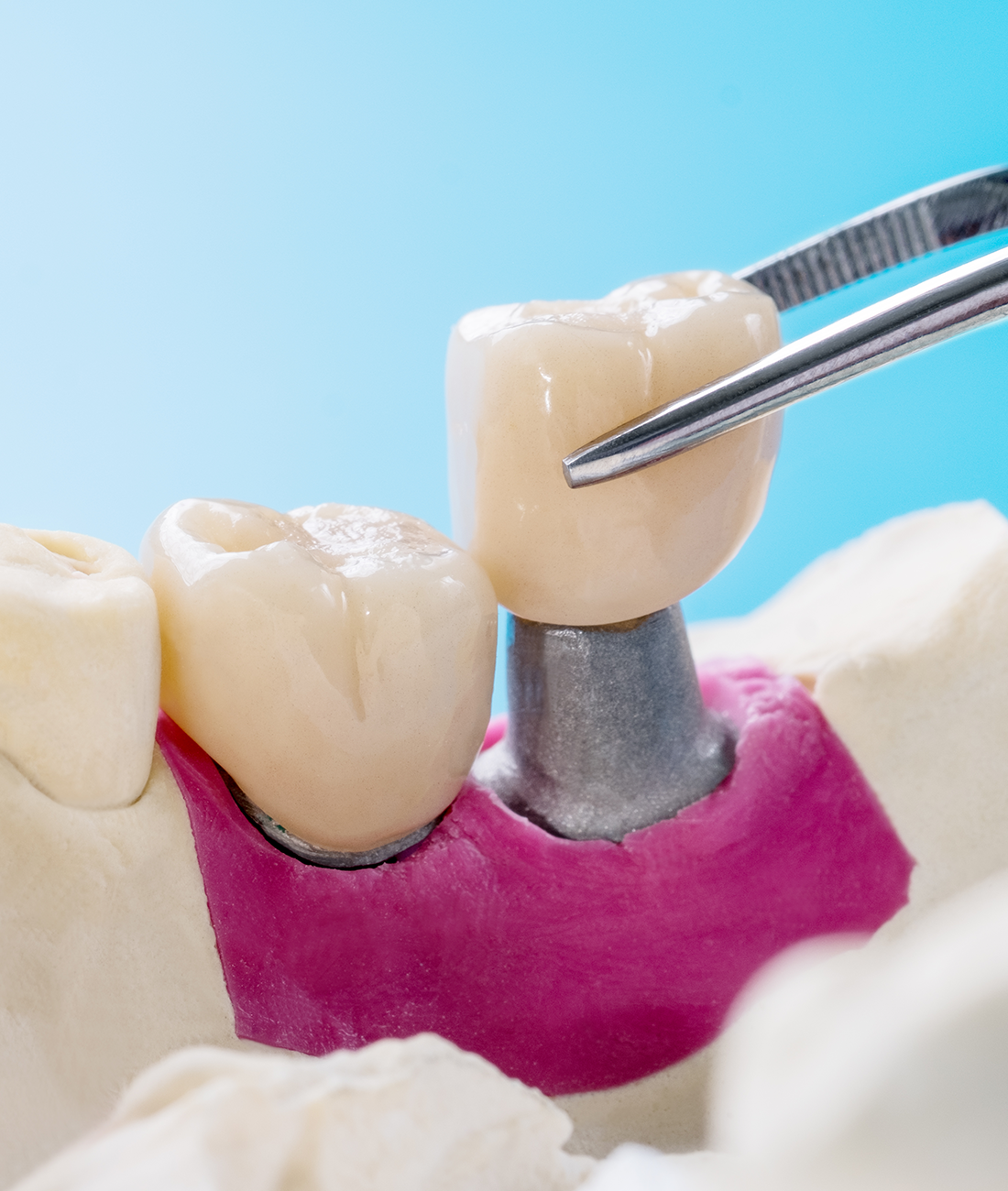
Tooth crowns are very versatile restoration procedures that completely encase your damaged tooth or teeth above the gum line.
Key Benefits of Dental Crowns
- Replaces missing teeth
- Holds a bridge in place
- Creates prosthetic tooth to cover dental implant
- Offers support to misshapen teeth or badly broken teeth
- Repairs a cracked tooth
- Covers tooth with a large filling if there is only a small amount of natural tooth structure remaining
- Looks completely natural
- Fixes “smile” and functional chewing problems
How long does it take to fit a dental crown?
Fitting a crown requires at least two visits to our clinic. Initially, we will remove decay, shape the tooth, and fit it with a temporary crownl.
On the subsequent visit we will remove the temporary crown, and then fit and adjust the final crown. Finally, we will cement the crown into place and you have a new beautiful looking tooth.
What are the capabilities of crowns?
Crown and bridgework arevery reliable solutions for major dental problems caused through accidents, diseases or wear and tear. Major problems can usually be corrected using these techniques. Material used in these repairs is either high-grade porcelain, or porcelain bonded to metal. A higher strength of the porcelain and metal materials is recommended to treat the most serious of dental problems. Where accidental damage has occurred, resulting in lost teeth, or where teeth have broken away through excessive wear, or as the result of old fillings breaking, crowns and/or bridges can be used as a long-term solution.
Many people have unexplained pain from filled back teeth, which is usually due to hairline cracks in the chewing part of the tooth. Placing crowns on these teeth relieves the pain and allows a return of full dental function for these teeth. In front teeth, older fillings can both weaken the teeth and cause “appearance” problems due to staining or chipping. Porcelain crowns and bridges are suitable in cases where porcelain veneers are not. In teeth with root canal fillings, crowns can prevent breakage.