Deciding between a root canal and tooth extraction is one of the most common crossroads in dental care. Whether your tooth is severely infected, deeply decayed, or damaged by trauma, understanding the implications of each option can help you make an informed choice that prioritizes your long-term oral health and quality of life.
Understanding Your Two Options: Root Canal Therapy vs Tooth Extraction
The fundamental difference between these procedures lies in outcome and philosophy. A root canal treatment preserves your natural tooth by removing the infected or damaged pulp—the nerve and blood vessels inside the tooth—then sealing the space to prevent future infection. Extraction, conversely, involves removing the entire tooth, leaving an empty space in your jaw that will eventually require restoration through an implant, bridge, or denture.
Modern root canal therapy has evolved significantly from earlier decades. Today’s endodontic treatments are highly predictable, with success rates exceeding 90% when performed by skilled practitioners. The procedure itself has become considerably less uncomfortable due to advanced anesthesia techniques and specialized equipment that allows dentists to complete treatment more efficiently and precisely.
When Root Canal Therapy Is Your Best Choice
Root canal therapy becomes the optimal solution when several factors align in your clinical picture:
- Your tooth has sufficient remaining structure above the gumline to support a crown or restoration
- The tooth is located in an area of your mouth critical for chewing function—such as molars or bicuspids
- Your bone level around the tooth is healthy and stable, without significant periodontal disease
- The infection or damage is contained within the pulp, with no abscess extending into surrounding bone
- You prefer to maintain your natural tooth over an artificial replacement
When Tooth Extraction Becomes the Practical Option
Extraction may be recommended when these clinical circumstances exist:
- The tooth has fractured below the gumline, making restoration impossible
- Advanced periodontal disease has compromised the tooth’s support system irreversibly
- A large periapical abscess exists, indicating infection beyond the root apex
- Root resorption or severe internal calcification makes endodontic treatment technically unfeasible
- The tooth fails previous root canal treatment despite retreatment attempts
The Financial Picture: Cost, Value, and Long-Term Investment
Initial costs paint a seemingly simple picture. A straightforward tooth extraction ranges from $150 to $350, while root canal treatment typically costs $800 to $1,500, depending on tooth complexity and location.
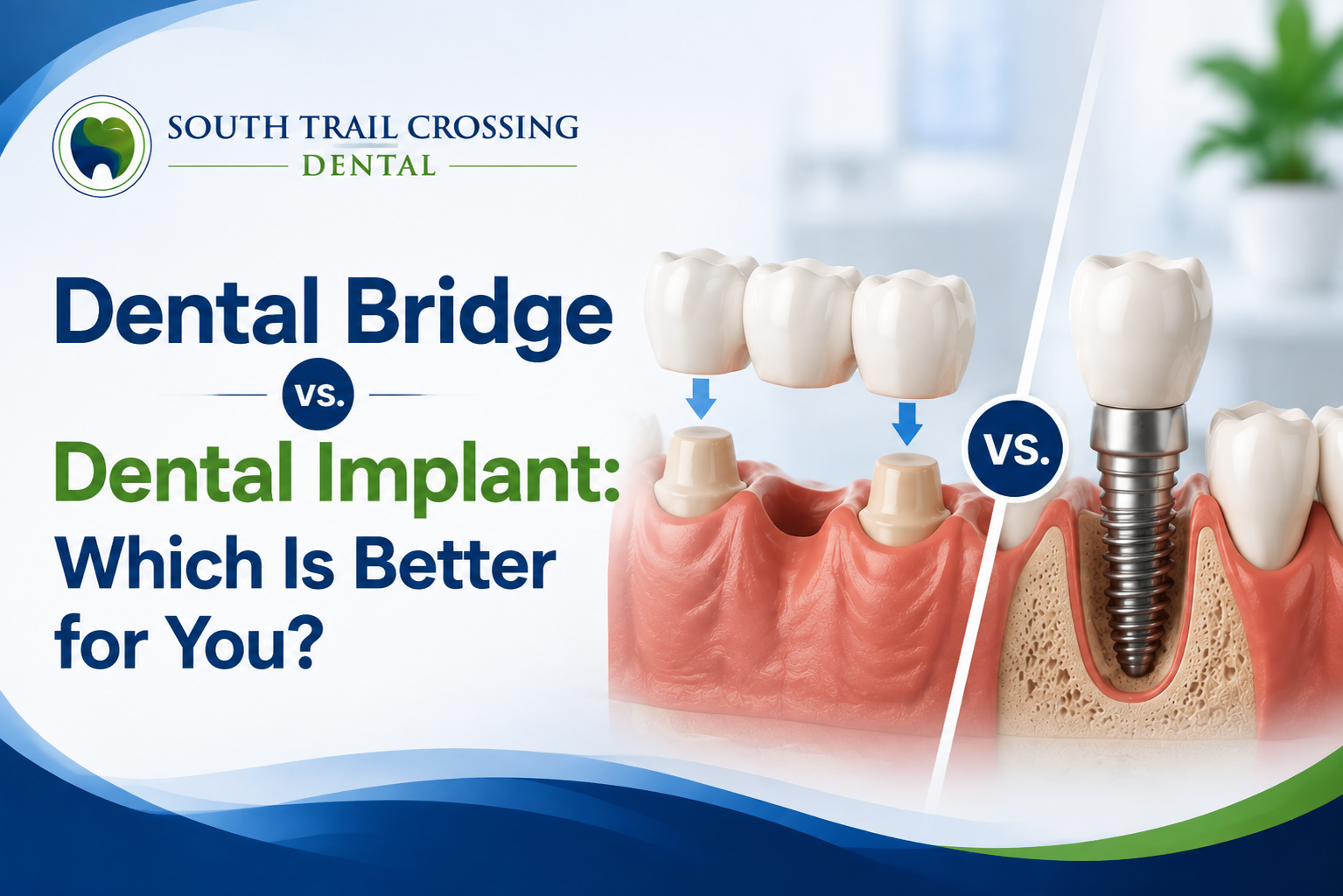
However, this snapshot becomes more complex when you factor in restoration costs. An extracted tooth requires replacement—whether through a dental implant ($1,500–$3,500), fixed bridge ($1,200–$2,500), or partial denture ($300–$800). When totaled, the replacement often costs two to three times more than the original extraction.
A root canal, followed by a crown ($800–$1,200), represents a more economical path over your lifetime, especially since natural teeth supported by successful endodontic treatment can function for decades.
Recovery and Lifestyle Impact
Recovery timelines differ between procedures, affecting your daily activities. Root canal patients typically experience 3–7 days of mild post-treatment sensitivity, managed with over-the-counter pain relief.
You can return to normal eating within 24 hours, though chewing on the treated side should be minimized until the permanent restoration is placed. Tooth Extraction recovery spans 1–2 weeks, with swelling, discomfort, and dietary restrictions more pronounced. If implant placement is delayed, you will experience a functional gap during the healing period. Many patients report that root canal recovery is less disruptive to their work and social schedules.
Preserving Your Natural Smile: The Intangible Benefits
Beyond clinical and financial metrics, saving your natural tooth carries psychological and biological advantages. Your natural tooth maintains proprioception—the sensory feedback that tells your brain where and how hard you are biting.
This prevents overloading of adjacent teeth and maintains balanced chewing forces across your dental arch. Replacing a tooth, even with state-of-the-art implants, cannot fully replicate this proprioceptive function. Additionally, natural teeth preserve jawbone structure more effectively.
Extracted teeth lead to progressive bone resorption—your jaw actually shrinks over time. This bone loss can accelerate aging of facial features and complicate future dental work. A tooth saved through endodontic therapy preserves the surrounding bone architecture indefinitely. Contact us for more information.
Frequently Asked Questions
Will a root canal-treated tooth function normally?
Yes. After the tooth is restored with a crown, it functions essentially identically to a natural tooth for chewing and speaking. Research shows that endodontically treated teeth, when properly restored, perform as well as untreated teeth over decades of use.
Can a tooth fail after a root canal?
Approximately 10–15% of root canal treatments require retreatment or extraction within 10 years, often due to new cracks, failed crowns exposing the tooth to bacteria, or incomplete initial treatment. However, this success rate exceeds that of extraction followed by implant complications, which occur in 5–10% of cases initially and more frequently over the implant’s lifespan.
Is it better to extract an infected tooth immediately?
Delaying extraction when infection is severe can pose health risks, as infection can spread. However, most infections respond well to root canal treatment with antibiotics. Extracting prematurely when treatment is viable sacrifices long-term function and bone preservation unnecessarily.
How do I know which option is right for me?
Request a comprehensive evaluation from your dentist or endodontist, including X-rays and clinical examination. Ask specifically whether your tooth is treatable, what the success probability is, and what happens if treatment fails. Discuss your values—are you prioritizing cost savings now, or long-term function and bone preservation? Armed with this information, you can make a decision aligned with both your clinical needs and personal preferences.
Both root canal therapy and tooth extraction have legitimate roles in dentistry. The best choice depends on your specific clinical situation, your priorities, and your vision for your long-term oral health. Whatever you decide, ensure it’s made in partnership with a qualified dental professional who can guide you toward the outcome that serves your smile best.

South Trail Crossing Dental clinic, the dentist near you, delivers a different dentistry that is based on our THREE core philosophies – providing best possible dental care to all our patients, treating each patient as a unique individual with unique needs, and providing integrated treatment addressing simultaneously oral health and systemic or overall health.