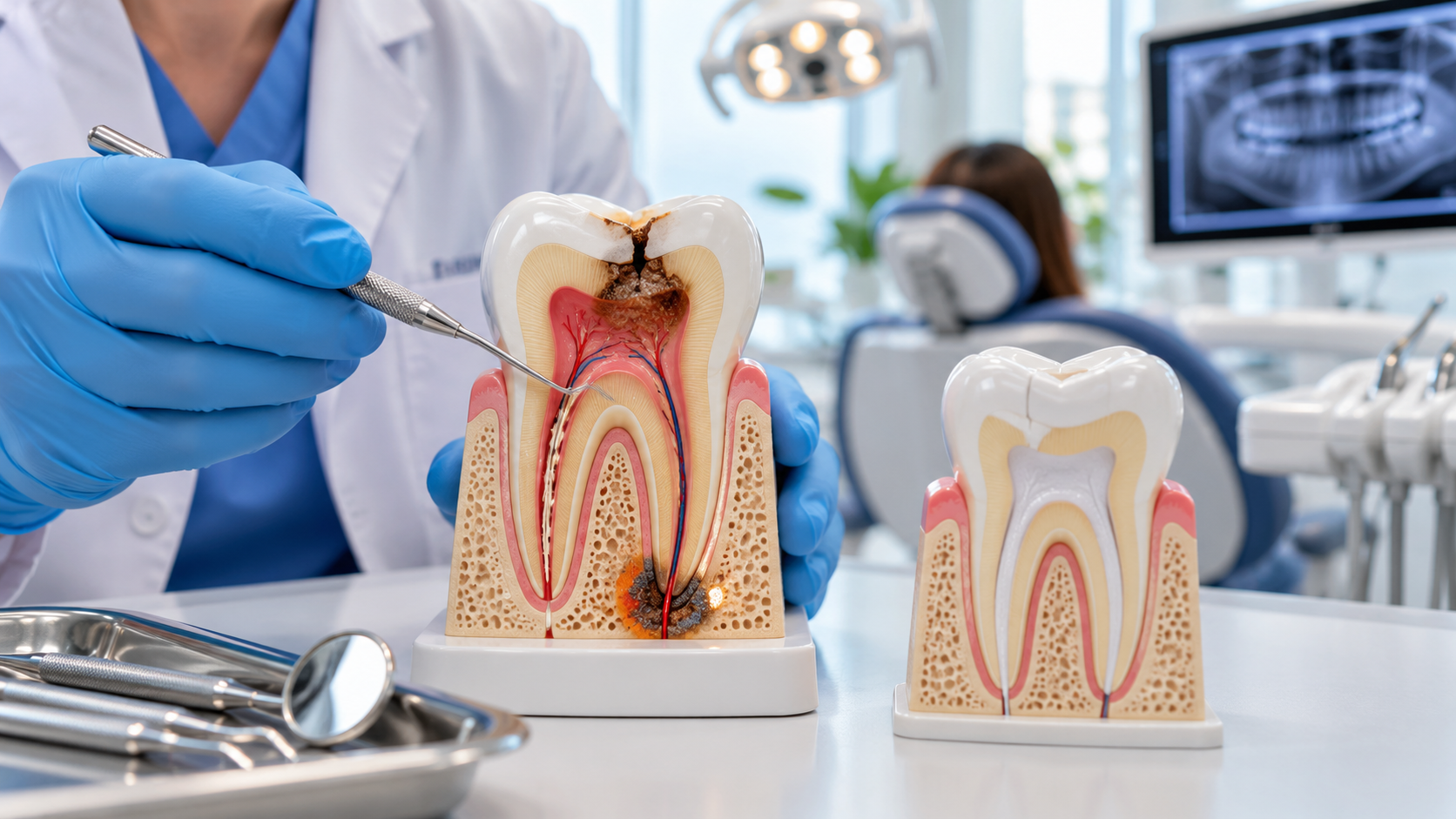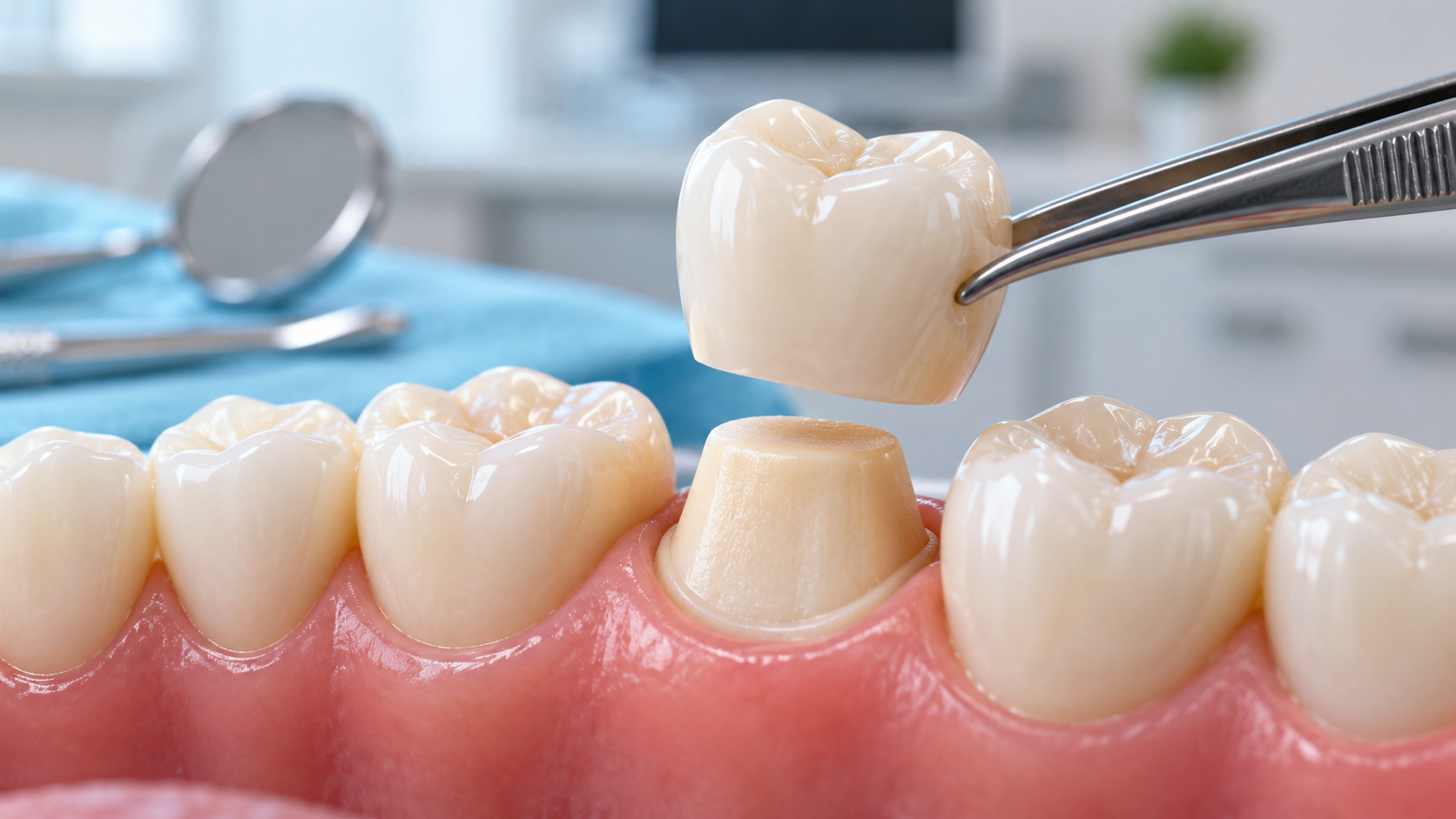
A damaged tooth does not always need to be removed. In many cases, a dental crown can protect the remaining tooth structure, restore normal function, and help prevent further damage.
A dental crown is a custom-made restoration that covers the visible portion of a tooth. It can be used when a tooth has become too weak, cracked, worn, or damaged to be reliably restored with a filling alone. Crowns may also be recommended after certain root canal treatments or as part of other restorative procedures.
The challenge is that it is not always obvious when you need one. A tooth may look relatively normal while having significant structural damage underneath.
Here are seven signs that it may be time to ask your dentist whether a dental crown is the right treatment for your tooth.
1. You Have a Cracked or Fractured Tooth
A crack is one of the most common reasons a dentist may recommend a crown.
Teeth can crack from biting hard foods, grinding or clenching, an injury, a large existing filling, or simply years of wear. Some cracks are easy to see, while others may be difficult to detect without a dental examination.
You may notice symptoms such as:
- Sharp pain when biting or chewing
- Sensitivity to hot or cold foods
- Pain that comes and goes
- Discomfort when you release your bite
- A rough or damaged area on the tooth
A crown covers the tooth and helps hold the remaining structure together, protecting it from the forces created during chewing.
However, not every cracked tooth can be treated with a crown. If a crack extends too deeply below the gum line or into the root, other treatment may be necessary. If the crack has reached the pulp inside the tooth, root canal treatment may also be required before the tooth is restored.
You can learn more about this in our guide, Can a Root Canal Save a Cracked or Infected Tooth?
If you experience pain when biting on a particular tooth, it is worth having it examined before the crack becomes more serious.
2. Your Tooth Has a Very Large Filling
Fillings are an effective way to restore teeth affected by cavities, but a filling needs enough healthy natural tooth structure around it for support.
When a tooth has a very large filling, there may not be much natural enamel and dentin left. Over time, the remaining portions of the tooth can become weaker and more likely to crack or break under normal chewing pressure.
You may need a crown if:
- A filling takes up a large portion of the tooth
- An old filling is starting to break down
- Part of the tooth around the filling has fractured
- There is new decay around or underneath an existing filling
- The remaining tooth structure is too weak for another filling
For small to moderate areas of decay or damage, tooth-coloured fillings may be enough to restore the tooth. When considerably more tooth structure has been lost, a crown may provide greater coverage and support.
Your dentist can examine the tooth and determine whether replacing the filling is sufficient or whether a crown would provide a more suitable long-term restoration.
3. A Tooth Is Broken or Has Lost a Significant Portion of Its Structure
Breaking a tooth can happen suddenly.
You might bite into something hard, suffer an injury, or discover that part of a weakened tooth has broken off while eating. Teeth that have previously been affected by decay or large fillings may be particularly vulnerable.
A small chip does not automatically mean that you need a crown. Minor damage can sometimes be repaired with bonding or another conservative restoration.
A crown may be considered when a significant portion of the tooth is missing but there is still enough healthy structure to save it.
The crown covers and reshapes the damaged tooth so that you can chew more comfortably while helping protect the remaining structure.
If a tooth breaks unexpectedly, keep any pieces you can find and contact your dentist. Avoid chewing on that side until the tooth has been evaluated. A badly broken tooth accompanied by severe pain, swelling, or bleeding may require emergency dental care.
The sooner the tooth is examined, the better your dentist can determine whether it can be restored.
4. Your Tooth Is Severely Worn Down
Teeth naturally experience some wear over time, but excessive wear can shorten teeth, weaken enamel, alter your bite, and make teeth more vulnerable to further damage.
Severe tooth wear may be caused by several factors, including frequent grinding or clenching.
People who grind their teeth may not realize they are doing it, particularly if the grinding happens during sleep. Possible signs include:
- Flattened or shortened teeth
- Small cracks or chips
- Morning jaw soreness
- Tooth sensitivity
- Headaches after waking
- Worn chewing surfaces
When enough tooth structure has been lost, crowns may sometimes be used to restore the shape, strength, and function of affected teeth.
It is also important to address the reason the teeth are wearing down. Restoring a tooth without managing ongoing grinding or clenching could put the new restoration under excessive pressure.
Depending on your needs, your dentist may recommend a custom mouth guard to help protect your teeth and dental restorations from nighttime grinding.
5. You Have Had Root Canal Treatment
A tooth that has undergone root canal treatment may sometimes need a crown afterward, particularly if it is a molar or premolar that experiences significant chewing pressure.
During a root canal, infected or damaged tissue inside the tooth is removed and the canals are cleaned and sealed. Although this treatment can preserve the natural tooth, the tooth may already have lost a significant amount of structure because of decay, cracking, or previous dental work.
A crown can help protect the remaining tooth from fracture.
Not every root canal-treated tooth automatically requires a crown. Front teeth, for example, experience different forces than back teeth and may sometimes be restored with a filling when enough healthy structure remains.
Your dentist will consider the location of the tooth, the amount of remaining tooth structure, your bite, and other factors before recommending the appropriate final restoration.
For more information, read How Long Does Root Canal Treatment Last?
6. You Have Ongoing Pain When You Bite or Chew
Pain while chewing should not be ignored.
There are many possible reasons a tooth can hurt when pressure is applied. These include:
- A crack in the tooth
- Tooth decay
- A damaged or loose filling
- Infection inside the tooth
- Problems with the bite
- Inflammation around the tooth
In some cases, a hairline crack in a tooth with a large filling can cause discomfort even though the tooth appears normal from the outside. A crown may be recommended when the underlying problem is structural and the tooth can still be restored.
However, a crown is not a treatment for every type of toothache.
For example, if bacteria have reached the pulp inside the tooth and caused an infection, the infection may need to be treated before a crown can be placed. Other conditions may require completely different treatment.
This is why persistent chewing pain needs a proper diagnosis rather than simply covering the tooth.
During a comprehensive dental exam, your dentist can examine the tooth, assess your bite, review existing restorations, and use appropriate X-rays or other tests to determine what is causing your symptoms.
7. Your Dentist Says the Tooth Is Too Weak for a Filling Alone
Sometimes there are no obvious symptoms at all.
You may not have pain, sensitivity, or a visibly broken tooth, but your dentist may identify significant structural weakness during a routine examination.
For example, a tooth may have:
- Extensive decay
- A very large old filling
- Fine cracks
- Thin remaining walls
- Significant wear
- Previous dental treatment that has reduced its strength
Placing another filling in a severely weakened tooth may not always provide enough protection.
A filling replaces a damaged portion of the tooth, while a crown covers the visible tooth structure above the gum line. This greater coverage can make a crown more appropriate when the tooth requires additional support.
Regular dental exams can help identify these problems before a weakened tooth suddenly breaks.
What Exactly Is a Dental Crown?
A dental crown is a custom restoration shaped to fit over a prepared tooth. It restores the tooth’s shape and chewing surface while protecting the structure underneath.
Crowns can be made from different dental materials. The material recommended for you will depend on factors such as where the tooth is located, how much chewing pressure it receives, your aesthetic preferences, and your individual treatment needs.
At South Trail Crossing Dental, crowns may be used for several restorative purposes, including protecting cracked or badly damaged teeth, covering teeth with large fillings, restoring certain root canal-treated teeth, supporting a dental bridge, and completing a dental implant restoration.
The goal is to create a restoration that functions properly while blending naturally with your smile.
Does Needing a Crown Mean Your Tooth Is Badly Damaged?
Not necessarily.
A crown is often recommended specifically because enough of the natural tooth can still be preserved.
The purpose is to protect and restore what remains before additional damage makes the tooth harder to save.
In some cases, placing a crown can prevent a weakened tooth from suffering a larger fracture later. In other cases, the tooth may first need treatment for decay or infection.
Your dentist will assess whether the tooth has enough healthy structure to support a crown and whether any other treatment is needed beforehand.
Crown or Filling
Both crowns and fillings can repair damaged teeth, but they are used in different situations.
A filling is generally a more conservative option when the damaged area is relatively limited and enough strong natural tooth remains.
A crown may be considered when the damage is more extensive or the tooth needs greater structural protection.
The decision is based on factors such as:
- How much healthy tooth structure remains
- The size and location of the damaged area
- Whether the tooth is cracked
- The size of existing fillings
- Whether the tooth has received root canal treatment
- The amount of chewing pressure the tooth receives
- Your overall bite and oral health
There is no single treatment that is appropriate for every damaged tooth. A dental examination is the best way to determine which option is suitable for your situation.
What Happens When You Get a Dental Crown?
Dental crown treatment typically involves preparing the damaged tooth so that the crown can fit securely over it.
Your dentist removes damaged or decayed material as necessary and shapes the tooth. An impression or scan is then used to help create a crown that fits your bite.
Depending on the type of crown and treatment process, you may wear a temporary crown while the final restoration is being prepared.
At the final appointment, your dentist checks the fit, shape, bite, and appearance of the crown before securing it in place.
After your crown is placed, it should allow you to bite and chew comfortably once you have adjusted to the restoration.
How Long Can a Dental Crown Last?
Dental crowns are designed to be durable, but they do not last forever.
Their lifespan can vary depending on the crown material, the location of the tooth, your bite, oral hygiene, diet, grinding habits, and other individual factors.
You can help protect a crown by:
- Brushing twice a day
- Cleaning between your teeth every day
- Attending regular dental examinations and cleanings
- Avoiding chewing ice and other extremely hard objects
- Managing teeth grinding or clenching
- Having changes in the crown checked promptly
The tooth underneath a crown can still develop decay, particularly around the edge where the crown meets the tooth. Healthy gums are also important for the long-term health of the restored tooth.
Good daily oral hygiene remains essential even after the tooth has been crowned.
When Should You See a Dentist?
You do not need to wait until a tooth breaks to have it checked.
Arrange a dental examination if you notice ongoing pain when chewing, a visible crack, a broken filling, unusual sensitivity, a piece of tooth breaking away, or a tooth that feels different when you bite.
Some problems produce few symptoms in their early stages, which is another reason routine dental visits are important.
If you suddenly develop severe tooth pain, significant swelling, uncontrolled bleeding, or a serious dental injury, contact a dental professional promptly to find out whether urgent treatment is required.
Need a Dental Crown in SE Calgary?
A cracked, worn, broken, or heavily filled tooth does not always need to be removed. Depending on the condition of the tooth, a dental crown may be able to restore its strength, appearance, and function while preserving the remaining natural structure.
The seven signs above can help you recognize when a tooth may need attention, but only a dental examination can determine whether a crown is the right treatment.
If you are concerned about a damaged or weakened tooth, South Trail Crossing Dental offers dental crowns in SE Calgary along with comprehensive restorative and preventive dental care in McKenzie Towne.
Our dental team can examine the tooth, explain what is causing the problem, and discuss the treatment options available to you.
Contact South Trail Crossing Dental to request an appointment and find out whether a dental crown may be appropriate for your smile.

South Trail Crossing Dental clinic, the dentist near you, delivers a different dentistry that is based on our THREE core philosophies – providing best possible dental care to all our patients, treating each patient as a unique individual with unique needs, and providing integrated treatment addressing simultaneously oral health and systemic or overall health.