A missing tooth can affect much more than the appearance of your smile. It may make chewing more difficult, affect the way you speak, and allow surrounding teeth to shift into the empty space. Fortunately, modern dentistry offers several effective solutions for replacing missing teeth. Two of the most common options are dental bridges and dental implants.
If you are considering tooth replacement at South Trail Crossing Dental, understanding the differences between these treatments can help you prepare for a discussion with your dental professional. While both options can restore the function and appearance of your smile, they work in different ways and may suit different dental needs.
What Is a Dental Bridge?
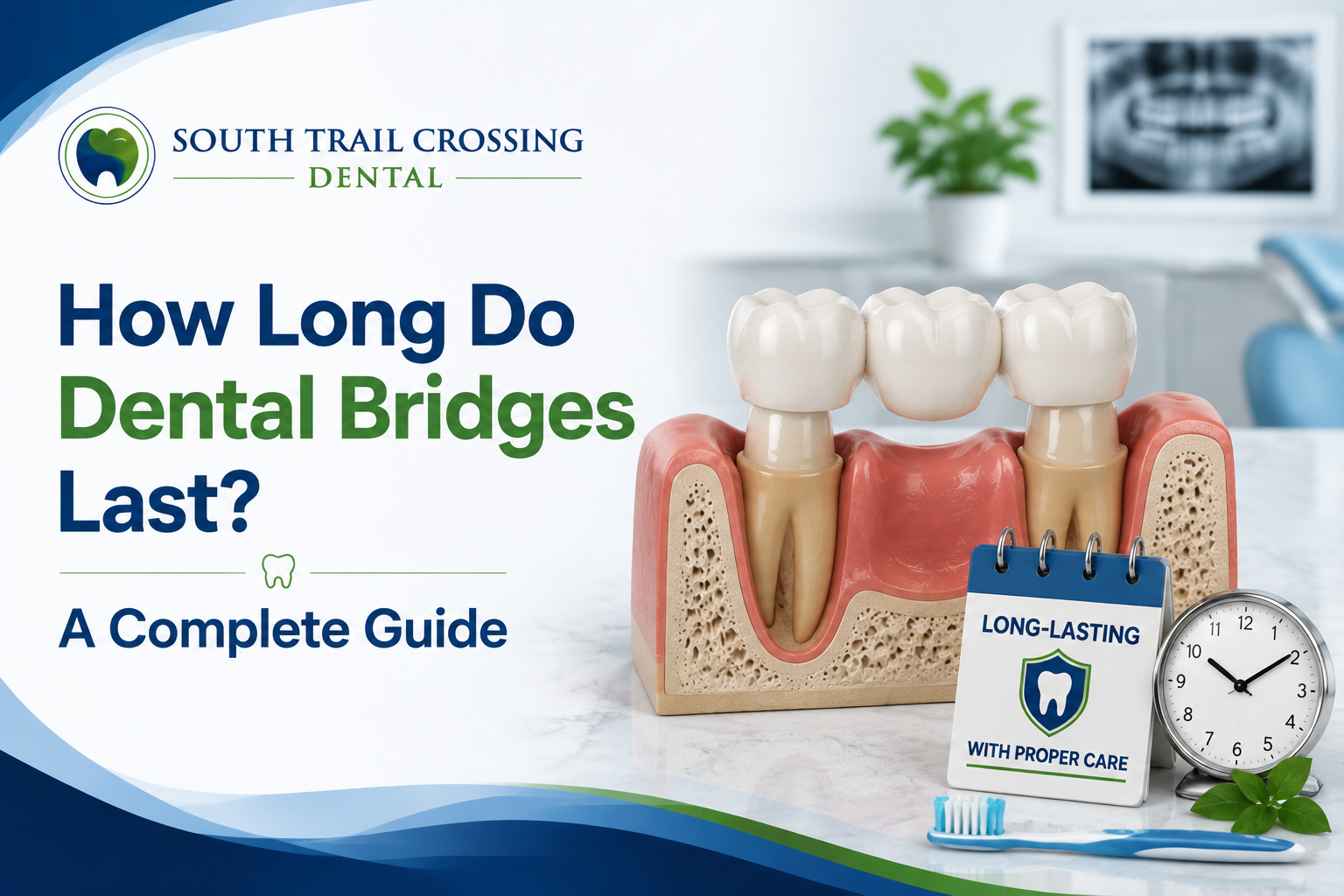
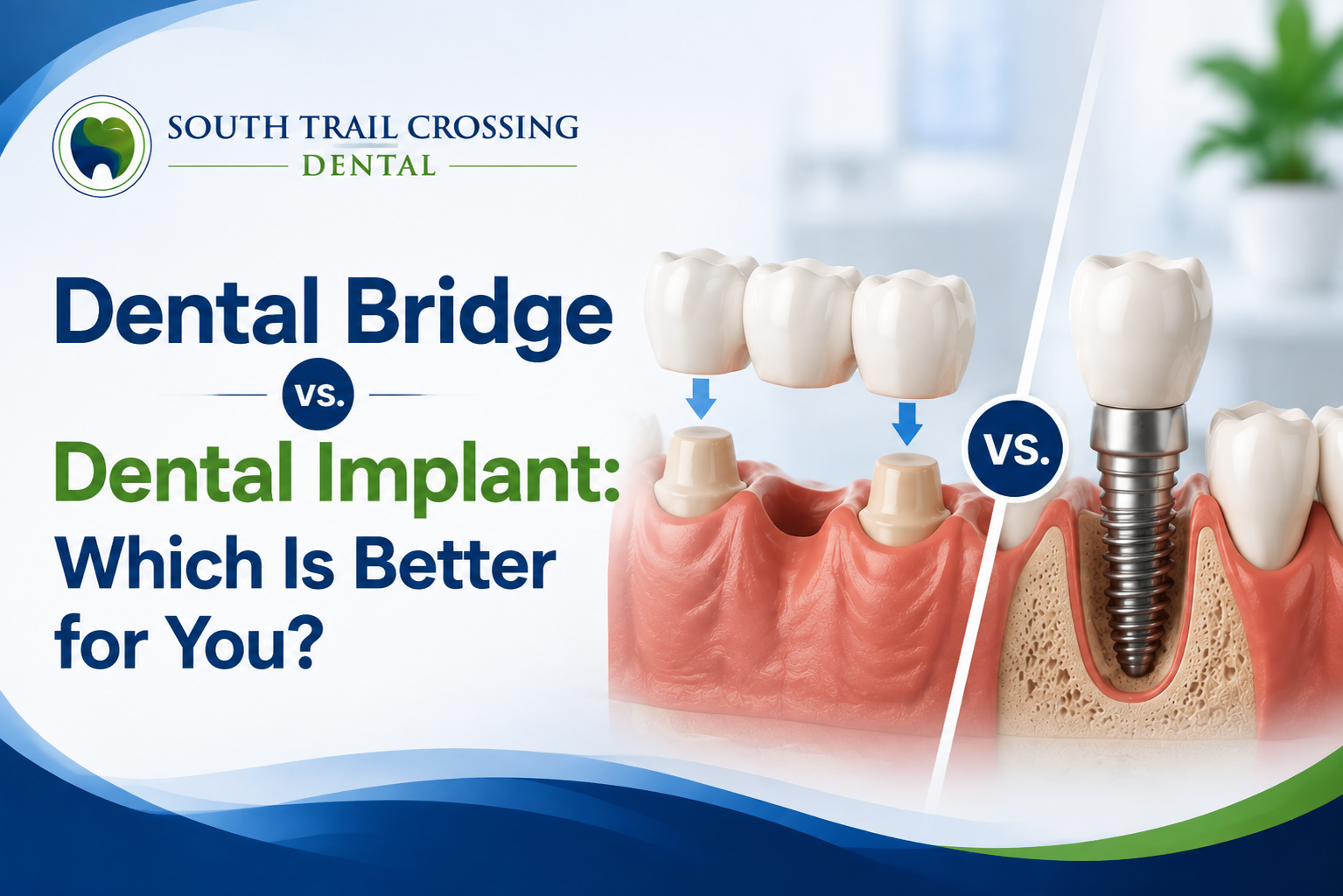
A dental bridge is a fixed dental restoration designed to replace one or more missing teeth. It typically includes an artificial tooth, called a pontic, that is supported by natural teeth or dental implants next to the gap.
With a traditional dental bridge, the neighbouring teeth are prepared to support the restoration. Once the bridge is securely fitted, it stays in place and is designed to function and look similar to natural teeth.
One advantage of a dental bridge is that treatment can often be completed more quickly than an implant because it generally does not require the same bone-healing period. A bridge may also be an option for people who prefer to avoid implant surgery.
What Is a Dental Implant?
A dental implant replaces a missing tooth using an implant that is placed directly into the jawbone. The implant functions as a-n artificial tooth root and provides support for a dental crown.
Implant treatment usually takes place over several stages. After the implant is placed, a healing period allows it to integrate with the surrounding bone before the final replacement tooth is attached. The exact timeline depends on factors such as oral health, bone condition, and the number of teeth being replaced.
Unlike a traditional bridge, an implant does not normally require healthy neighbouring teeth to be prepared as supports. This can make it an attractive option when preserving the natural structure of surrounding teeth is a priority.
Dental Bridge vs. Dental Implant: Key Differences
Although both treatments replace missing teeth, there are several important differences to consider.
1. Treatment Time
Dental bridges can often be completed in fewer appointments. The supporting teeth are prepared, impressions or digital scans may be taken, and the custom restoration is fabricated and fitted.
Dental implants generally require a longer treatment process because the implant needs time to heal and integrate with the ja-wbone. Some patients may also require additional procedures, such as bone grafting, if there is insufficient bone available.
2. Effect on Neighbouring Teeth
A traditional dental bridge relies on neighbouring teeth for support. These teeth generally need to be prepared so the bridge can be securely attached.
A dental implant is supported by the jawbone rather than neighbouring natural teeth. If the surrounding teeth are healthy, this may be an important consideration when deciding between the two options.
3. Jawbone Considerations
When a natural tooth is lost, the jawbone in that area can gradually change because the tooth root is no longer present.
A dental implant replaces the root portion of the missing tooth and connects with the jawbone. A traditional bridge replaces the visible tooth but does not replace the missing root.
This difference can be an important part of a long-term tooth replacement discussion.
4. Appearance
Both bridges and implants can be designed to look natural. Dental restorations can be customized to complement the colour, shape, and appearance of surrounding teeth.
The final result depends on factors such as the location of the missing tooth, the condition of the gums, the materials selected, and treatment planning.
5. Longevity
Both dental bridges and implants can provide long-term tooth replacement when properly maintained.
Dental bridges commonly last around 5 to 15 years, although their lifespan can vary depending on oral hygiene, supporting teeth, eating habits, and regular dental care.
Dental implants can also remain functional for many years. However, the crown attached to an implant may eventually require replacement because it experiences everyday chewing forces.
Read more : Why Dental Implants are so Popular?
Which Is More Comfortable?
Both treatments are designed to become comfortable and functional once your mouth has adjusted to them.
A dental bridge may feel slightly unfamiliar at first, but most patients adapt as they become accustomed to the restoration. Because implant treatment involves a surgical procedure, some temporary swelling or discomfort may occur during healing.
Your dental professional can explain what you can expect before and after treatment and provide appropriate aftercare instructions.
Which Is Easier to Maintain?
Both options require good oral hygiene.
With a dental bridge, it is particularly important to clean around the supporting teeth and beneath the artificial tooth. Plaque and food particles can collect in these areas if they are not cleaned properly.
Dental implants also require regular brushing and cleaning around the implant and crown. Although an implant-supported replacement tooth cannot develop tooth decay in the same way as a natural tooth, the surrounding gums and tissues still need appropriate care.
Regular dental examinations can help monitor the restoration and the health of your teeth and gums.
Is a Dental Bridge Cheaper Than a Dental Implant?
The initial cost of a dental bridge is often lower than the cost of an implant, but the overall price varies from patient to patient.
Factors that can influence treatment costs include the number of missing teeth, the materials used, the complexity of treatment, and whether additional procedures are required.
Although an implant may involve a higher initial investment, cost should not be the only factor when choosing treatment. It is also worth considering expected longevity, maintenance, treatment time, and the effect on neighbouring teeth.
A dental examination at South Trail Crossing Dental can help you understand which options may be appropriate for your individual situation and what your treatment may involve.
Who May Benefit From a Dental Bridge?
A dental bridge may be suitable for someone looking for a fixed replacement for a missing tooth and who has healthy teeth capable of supporting the restoration.
It may also be considered when a patient prefers not to undergo implant surgery or when an implant is not appropriate.
Bridges can sometimes be particularly practical when neighbouring teeth already require significant restoration, because those teeth may already benefit from crowns that can also support the bridge.
Who May Benefit From a Dental Implant?
Dental implants may be an option for patients who want a fixed replacement that does not rely on neighbouring natural teeth for support.
Healthy gums and adequate jawbone are important considerations. However, additional treatment may sometimes make implant placement possible when bone volume is limited.
Implants can be used for individual missing teeth and may also be incorporated into treatment plans involving multiple missing teeth.
Frequently Asked Questions
Is a dental implant better than a bridge?
Not necessarily for everyone. An implant can replace the tooth root and generally does not require neighbouring natural teeth as supports. A bridge may offer a simpler and faster treatment process. The appropriate option depends on your oral health, preferences, and treatment goals.
Which lasts longer, a dental bridge or implant?
Both can provide long-term results with proper care. Bridges commonly last around 5 to 15 years, while implants can remain functional for much longer in suitable patients. However, the crown attached to an implant may eventually need replacement.
Is a dental bridge easier than an implant?
A bridge generally involves fewer treatment stages because it does not require the same healing period as implant placement. An implant requires surgery and time for the implant to integrate with the jawbone.
Does a dental implant hurt more than a bridge?
Implant treatment involves surgery and may cause temporary discomfort or swelling during healing. A bridge does not normally involve implant surgery, although preparing supporting teeth can sometimes result in temporary sensitivity.
Can a dental bridge look natural?
Yes. A well-designed bridge can be customized to match surrounding teeth in colour, shape, and appearance.
Can a bridge be replaced with an implant later?
In some cases, yes. However, this depends on the condition of the gums, jawbone, and surrounding teeth. Your dental professional can determine whether implant treatment is suitable.
Which is better for front teeth?
Both options can replace missing front teeth. The best choice depends on the condition of neighbouring teeth, available bone, gum appearance, and your long-term goals.
What if my neighbouring teeth are healthy?
If your neighbouring teeth are healthy, you may want to discuss a dental implant because it generally does not require those teeth to be prepared as bridge supports. However, an examination is necessary to determine whether an implant is appropriate.
Choosing the Right Tooth Replacement Option
Choosing between a dental bridge and a dental implant is an individual decision. There is no single solution that is best for every patient.
A bridge may be appealing if you want a fixed replacement without implant surgery or if your neighbouring teeth are suitable for supporting the restoration. An implant may be worth considering if preserving healthy neighbouring teeth and replacing the missing tooth root are important priorities.
At South Trail Crossing Dental, discussing your options with a dental professional can help you understand the advantages and considerations of each approach. Your teeth, gums, jawbone, bite, overall oral health, treatment preferences, and long-term goals can all play a role in determining the most suitable solution.
If you have a missing tooth, don’t ignore the gap. Schedule a dental consultation to explore whether a bridge, implant, or another tooth replacement option could help restore your smile and chewing function. Contact us for more information

South Trail Crossing Dental clinic, the dentist near you, delivers a different dentistry that is based on our THREE core philosophies – providing best possible dental care to all our patients, treating each patient as a unique individual with unique needs, and providing integrated treatment addressing simultaneously oral health and systemic or overall health.