Many people feel nervous when they hear the words “root canal treatment.” For years, movies, old stories, and outdated information have made this common dental procedure seem painful or risky. In reality, modern root canal treatment is one of the safest and most effective ways to save a damaged or infected tooth while relieving discomfort.
If you have been told that you need root canal treatment in Calgary, you may be wondering whether the procedure is safe, how it works, and what to expect afterwards. Understanding the facts can help you feel more confident about your treatment and avoid unnecessary stress.
At South Trail Crossing Dental, our team focuses on providing gentle, patient-centered care. We believe that every patient deserves clear information before making decisions about their oral health.
What Is Root Canal Treatment?
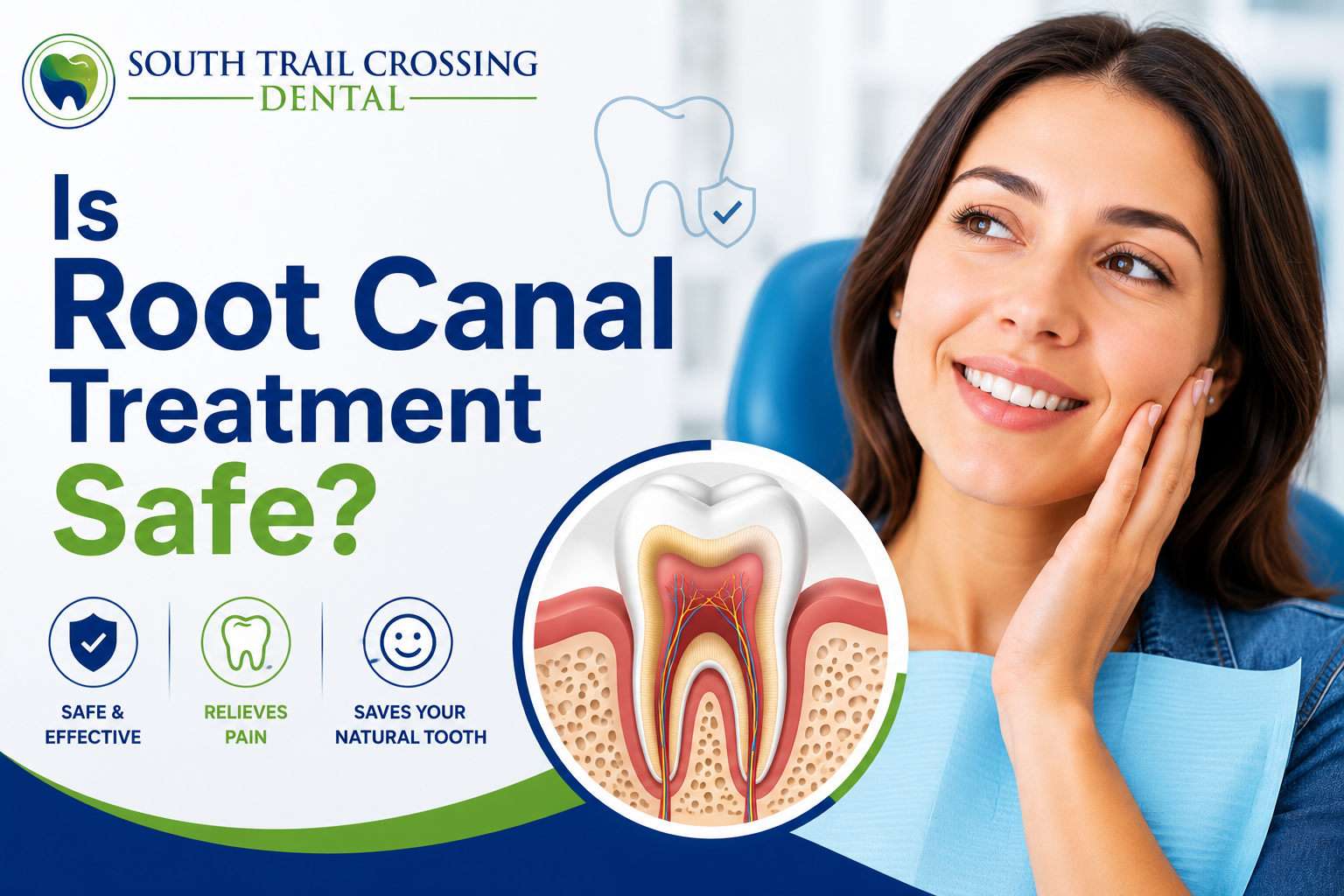
Root canal treatment is a dental procedure that removes infected or damaged tissue from inside a tooth. Every tooth contains a soft inner layer called the pulp, which holds nerves, blood vessels, and connective tissue. When this pulp becomes infected because of deep decay, a crack, trauma, or repeated dental work, it cannot heal on its own.
During the procedure, your dentist carefully removes the infected pulp, cleans the inside of the tooth, disinfects the root canals, and seals the space to prevent bacteria from returning. In many cases, a dental crown is later placed over the treated tooth to restore its strength and appearance.
The goal of root canal treatment is not simply to remove infection. It is to preserve your natural tooth whenever possible so that you can continue chewing, speaking, and smiling comfortably.
Is Root Canal Treatment Safe?
Yes. Modern root canal treatment is considered a safe and well-established procedure that has helped millions of people keep their natural teeth. Advances in dental technology, improved imaging, precise instruments, and effective local anesthesia have made treatment more comfortable and predictable than ever before.
The idea that root canal treatment causes illness has been repeatedly disproven through scientific research. There is no reliable evidence showing that properly performed root canal treatment causes disease elsewhere in the body. Instead, the procedure removes infection from the tooth, helping reduce bacteria and protect your overall oral health.
Choosing root canal treatment in SE Calgary allows patients to treat the source of infection before it spreads to nearby tissues.
Why Saving Your Natural Tooth Matters
Whenever possible, dentists recommend preserving a natural tooth rather than removing it. Your natural teeth are designed to work together, providing proper bite balance and supporting the jawbone.
When a tooth is extracted, neighboring teeth may gradually shift into the empty space. This movement can affect your bite, make cleaning more difficult, and sometimes increase the risk of additional dental problems. Replacing a missing tooth often requires more complex procedures, such as dental implants or bridges.
Root canal treatment allows you to keep your original tooth while restoring its function. With proper care, a treated tooth can continue serving you well for many years.
Signs You May Need Root Canal Treatment
Not every tooth infection causes severe pain. Some people experience only mild symptoms, while others notice no discomfort until the infection has progressed.
Common signs include:
- Persistent tooth pain that does not improve
- Sensitivity to hot or cold that lingers
- Pain when chewing or biting
- Swollen or tender gums around one tooth
- A darkened or discolored tooth
- A small bump on the gums near the affected tooth
- Swelling around the jaw or face
If you notice any of these symptoms, scheduling an examination as soon as possible is important. Early diagnosis often helps prevent the infection from becoming more serious.
What Happens During Root Canal Treatment?
Understanding the treatment process often helps reduce anxiety. Although every case is different, the procedure generally follows several straightforward steps.
First, the dentist examines the tooth and takes digital X-rays to understand the extent of the infection. Local anesthesia is then used to numb the area so that you remain comfortable throughout the procedure.
A small opening is created in the tooth to reach the infected pulp. Special instruments carefully clean and shape the root canals while removing bacteria and damaged tissue. The cleaned canals are disinfected before being filled with a safe sealing material that helps prevent future infection.
Finally, the tooth is restored with either a filling or a dental crown, depending on how much natural tooth structure remains.
Does Root Canal Treatment Hurt?
One of the biggest misconceptions about root canal treatment is that it is painful. In reality, the purpose of the procedure is to relieve pain caused by infection.
Because the tooth is thoroughly numbed with local anesthesia, most patients experience little discomfort during treatment. Many describe the procedure as feeling similar to receiving a routine dental filling.
Some mild tenderness after treatment is normal as the surrounding tissues heal. This temporary soreness usually improves within a few days and can often be managed with medications recommended by your dentist.
What Happens If You Delay Treatment?
Delaying treatment rarely makes the problem disappear. Once the pulp inside the tooth becomes infected, the infection usually continues to spread.
Without treatment, bacteria can damage more of the tooth, affect the surrounding bone, and eventually lead to an abscess. In some cases, the infection may become severe enough that the tooth can no longer be saved.
Seeking root canal treatment Calgary at the first sign of trouble often results in simpler treatment and a better long-term outcome.
How Successful Is Root Canal Treatment?
Root canal treatment has a very high success rate when performed appropriately and followed by proper restoration. Many treated teeth continue functioning normally for decades.
Long-term success depends on several factors, including the extent of the original infection, the quality of the final restoration, and your commitment to maintaining good oral hygiene.
Regular dental checkups allow your dentist to monitor the treated tooth and address any concerns before they become larger problems.
Caring for Your Tooth After Treatment
Recovery is usually straightforward, but proper aftercare helps protect your investment in your oral health.
Continue brushing twice each day and flossing daily while paying gentle attention around the treated tooth. Avoid chewing hard foods on the treated side until your permanent restoration has been placed. Attending your follow-up appointments is equally important because the final crown or filling helps strengthen and protect the tooth from future damage.
Maintaining these simple habits greatly increases the chances that your treated tooth will remain healthy for many years.
Choosing Root Canal Treatment in SE Calgary
Finding a dental team that listens to your concerns can make a significant difference in your overall experience. Patients often feel more comfortable when their dentist explains every step of the procedure and answers questions without rushing.
At South Trail Crossing Dental, we understand that many people feel anxious about root canal treatment. Our team focuses on creating a calm environment where patients feel informed, respected, and comfortable throughout every stage of care. We use modern diagnostic technology and gentle techniques to provide personalized treatment that supports both your immediate comfort and your long-term oral health.
Whether you are experiencing tooth pain or have recently been told that you need root canal treatment in SE Calgary, our goal is to help you make informed decisions with confidence.
Conclusion
Root canal treatment is a safe, reliable, and highly effective procedure that helps preserve your natural tooth while eliminating infection and relieving pain. Modern techniques have transformed the treatment experience, making it far more comfortable than many people expect.
Ignoring an infected tooth can allow the problem to worsen and may eventually lead to tooth loss or more extensive treatment. Receiving timely root canal treatment Calgary can protect your smile, restore normal function, and help you maintain better oral health for years to come.
If you are experiencing persistent tooth pain, sensitivity, or swelling, the team at South Trail Crossing Dental is here to help. We are committed to providing compassionate care, clear guidance, and personalized treatment plans so you can feel confident about every step toward a healthier smile. Contact us for more information.

South Trail Crossing Dental clinic, the dentist near you, delivers a different dentistry that is based on our THREE core philosophies – providing best possible dental care to all our patients, treating each patient as a unique individual with unique needs, and providing integrated treatment addressing simultaneously oral health and systemic or overall health.