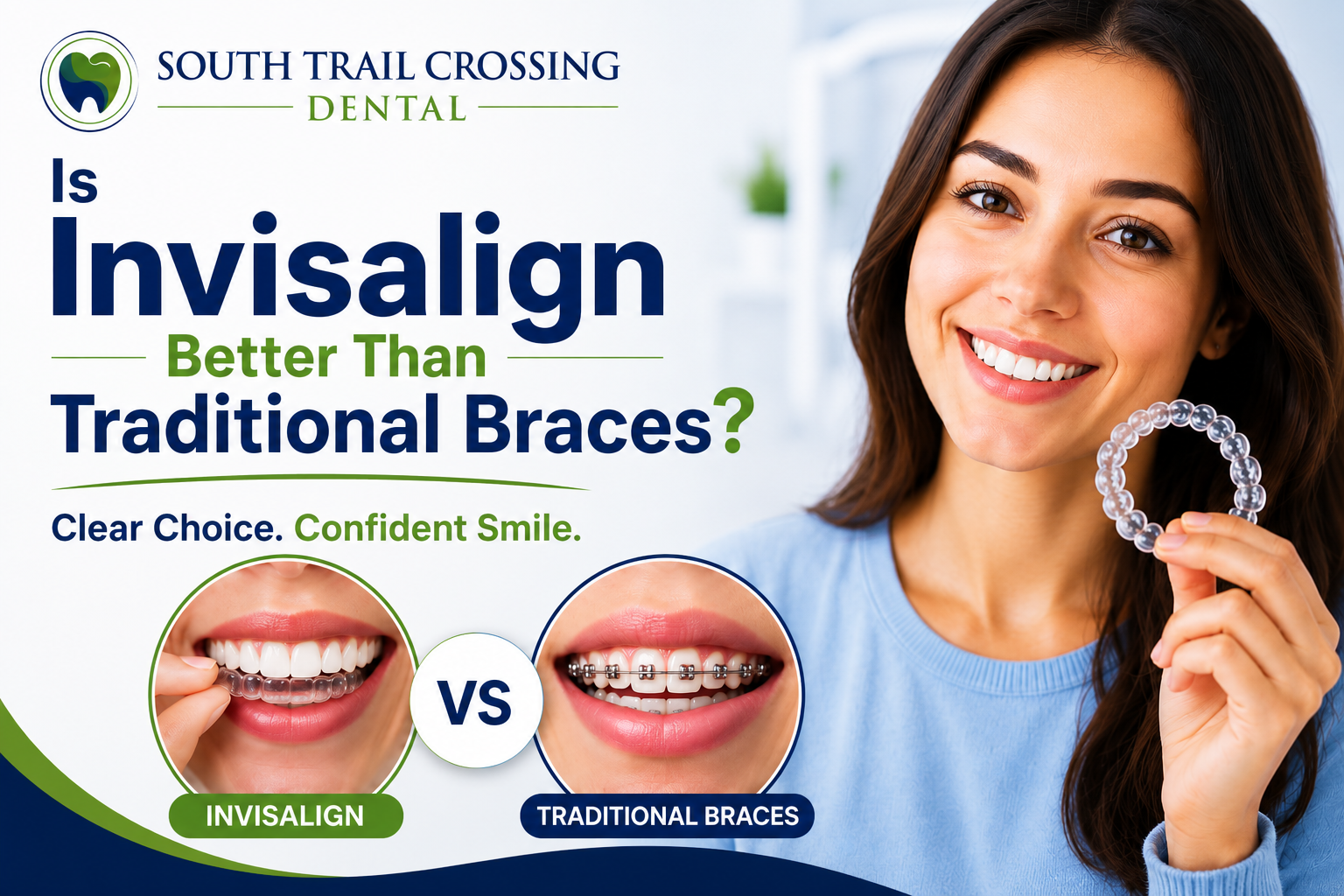
A straighter smile can improve more than just your appearance. Properly aligned teeth are easier to clean, can reduce uneven wear, and often improve the way your teeth come together when you bite. If you have been thinking about orthodontic treatment, one of the first questions you may have is whether Invisalign is better than traditional braces.
The truth is that there is no single answer that works for everyone. Both treatment options are highly effective, but they are designed to meet different needs. Your lifestyle, the condition of your teeth, your treatment goals, and the complexity of your case all play an important role in determining which option is the better fit.
At South Trail Crossing Dental, we help patients make informed decisions about their smiles by carefully evaluating their oral health and discussing every available treatment option. This guide explains the differences between Invisalign and traditional braces so you can choose the solution that best matches your needs.
What Is Invisalign?
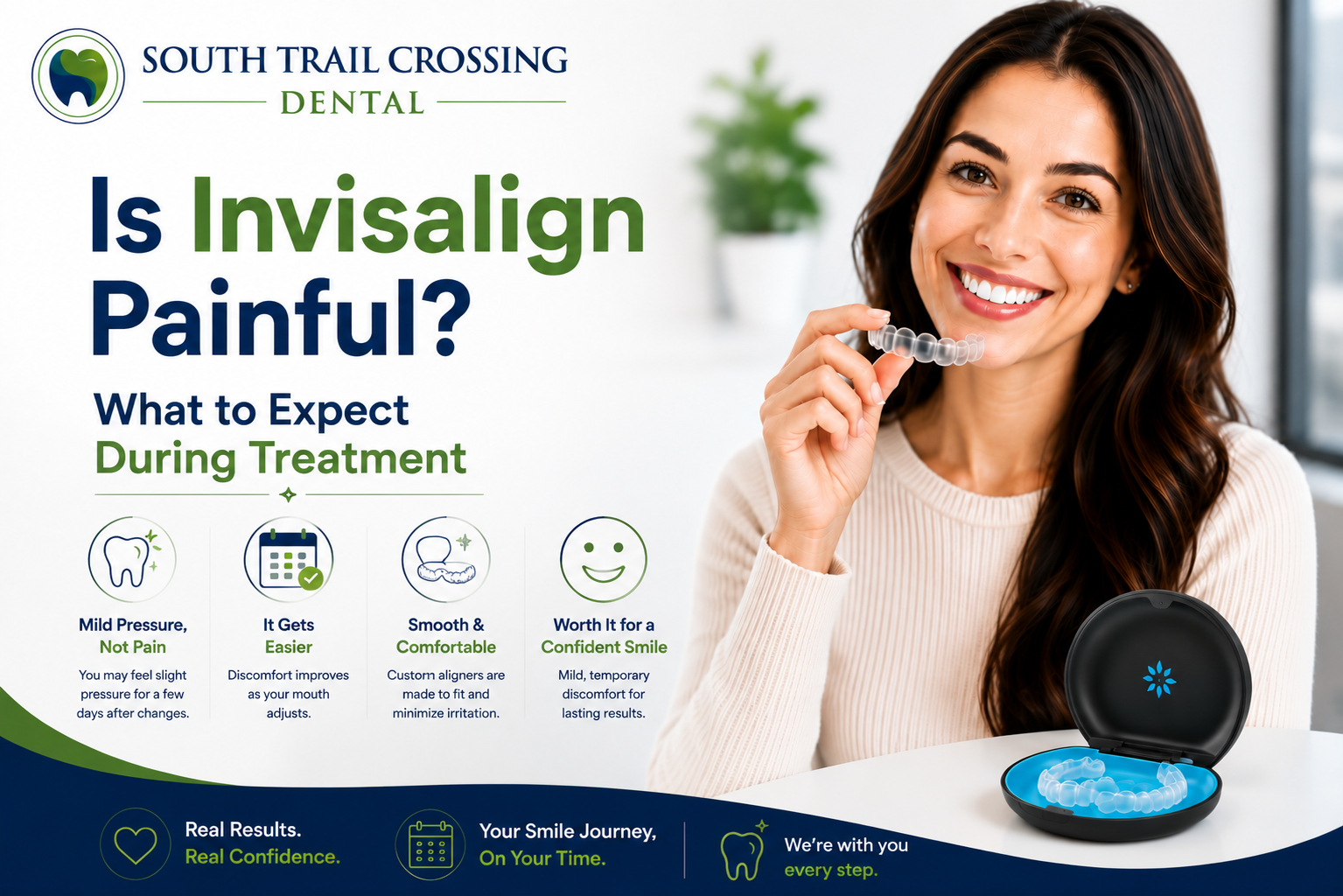
Invisalign is an orthodontic treatment that uses a series of clear, removable aligners to gradually move teeth into their ideal position. Each set of aligners is custom-made to fit your smile and is replaced every one to two weeks as your teeth shift throughout treatment.
Unlike braces, Invisalign does not rely on metal brackets or wires. The aligners are made from a smooth, transparent material that fits comfortably over your teeth, making them much less noticeable during everyday activities. Many adults and teenagers choose Invisalign because it allows them to improve their smile while maintaining a natural appearance.
What Are Traditional Braces?
Traditional braces straighten teeth using metal brackets attached to each tooth and connected by wires. Your dentist or orthodontic provider adjusts these wires during scheduled visits, allowing gradual movement until the desired alignment is achieved.
Modern braces are smaller and more comfortable than older designs, and they remain one of the most reliable options for correcting complex orthodontic concerns. Because braces stay attached throughout treatment, they continue working around the clock without depending on patient compliance.
Invisalign Versus Traditional Braces: What Are the Main Differences?
Although both treatments aim to create a healthier, straighter smile, they differ in several important ways.
Appearance
One of the biggest reasons patients choose Invisalign is its nearly invisible appearance. The clear aligners blend naturally with your teeth, making them difficult to notice during conversations, work meetings, or social events.
Traditional braces, on the other hand, are more visible because the brackets and wires are attached to the front of your teeth. While many patients become comfortable wearing braces, those who prefer a discreet treatment often feel more confident with Invisalign.
Comfort
Both Invisalign and braces require an adjustment period, but many patients find Invisalign more comfortable.
The aligners are made from smooth plastic without sharp edges that may irritate the cheeks or lips. Each new set of aligners creates gentle pressure as your teeth move, which usually fades after a few days.
Braces may cause temporary soreness after adjustments, and brackets or wires can occasionally rub against the inside of your mouth. Fortunately, dental wax and simple care instructions usually help manage this discomfort.
Convenience
One advantage of Invisalign is that the aligners can be removed while eating, brushing, and flossing. This allows you to continue enjoying most of your favorite foods without worrying about damaging your appliance.
Braces remain attached throughout treatment, so certain foods such as popcorn, sticky candy, chewing gum, and hard nuts should be avoided because they can damage brackets or wires.
Which Treatment Works Faster?
Treatment time depends on the complexity of your orthodontic needs rather than the treatment itself.
For mild to moderate alignment concerns, Invisalign often delivers excellent results within 12 to 18 months. Some patients with minor corrections may complete treatment even sooner.
Traditional braces may require a similar timeline, although more complex bite corrections often take longer. During your consultation, your dentist can provide a personalized estimate based on your specific case.
Can Invisalign Treat Every Orthodontic Problem?
Invisalign has advanced significantly over the years and can successfully treat many common orthodontic concerns, including:
- Crowded teeth
- Gaps between teeth
- Mild overbites
- Mild underbites
- Crossbites
- Minor bite alignment issues
However, severe jaw alignment problems or complex tooth movements may still be better treated with traditional braces. Every smile is unique, which is why a professional examination is essential before choosing treatment.
Which Option Is Easier to Keep Clean?
Good oral hygiene is important during any orthodontic treatment.
With Invisalign, maintaining healthy teeth is often easier because you remove the aligners before brushing and flossing. This allows you to clean your teeth normally without working around brackets and wires. The aligners themselves should also be cleaned daily to keep them fresh and clear.
Braces require additional care because food particles can become trapped around the brackets. Patients often need special brushes or flossing tools to thoroughly clean every surface of their teeth. While this requires extra effort, proper daily care helps prevent cavities and gum problems throughout treatment.
Does Invisalign Require More Responsibility?
One important difference between Invisalign and braces is patient commitment.
For Invisalign to work effectively, the aligners should be worn for about 20 to 22 hours each day. Removing them too often or forgetting to wear them regularly may slow treatment and affect the final results.
Traditional braces do not depend on daily compliance because they remain attached to your teeth. This makes braces a practical choice for younger patients or anyone who may struggle to wear removable aligners consistently.
Is Invisalign Better for Adults?
Many adults choose Invisalign because it fits comfortably into busy professional and personal lives.
Clear aligners offer a discreet way to improve your smile without drawing attention during meetings, presentations, or social occasions. Adults also appreciate being able to remove the aligners before meals and maintain their normal brushing and flossing routine.
However, adults with more complex orthodontic concerns may achieve better results with traditional braces. The best treatment always depends on your oral health rather than your age.
How Much Do Invisalign and Braces Cost?
The cost of orthodontic treatment varies depending on the complexity of your case and the length of treatment.
Many patients are surprised to learn that Invisalign and traditional braces often have comparable costs. Your dental insurance may also provide partial coverage for orthodontic treatment, depending on your plan.
At South Trail Crossing Dental, we believe every patient deserves clear information about treatment costs before making a decision. Our team will explain your treatment options, discuss insurance coverage when applicable, and review available payment solutions to help make care more manageable.
How Do You Choose Between Invisalign and Traditional Braces?
Instead of asking which treatment is better overall, it is more helpful to ask which treatment is better for your smile.
You may be an excellent candidate for Invisalign if you want a discreet treatment, have mild to moderate alignment concerns, and are committed to wearing your aligners as instructed every day.
Traditional braces may be the better choice if you have complex bite issues, significant crowding, or need precise tooth movement that fixed appliances can provide more effectively.
A professional assessment remains the most reliable way to determine the right treatment for your individual needs.
Why Choose South Trail Crossing Dental for Invisalign Treatment?
Choosing orthodontic treatment is an important decision, and having the right dental team makes the experience much more comfortable.
At South Trail Crossing Dental, we take time to understand your goals before recommending treatment. Every smile is carefully evaluated, allowing us to create a personalized treatment plan that focuses on both appearance and long-term oral health. Throughout your Invisalign journey, our team monitors your progress closely and answers your questions at every stage, helping you feel confident from your first consultation to your final results.
Final Thoughts
So, is Invisalign better than traditional braces? For many patients, Invisalign offers an attractive combination of comfort, convenience, and a nearly invisible appearance. For others, traditional braces remain the most effective solution for achieving lasting results, especially when more complex orthodontic treatment is needed.
The right choice depends on your smile, your lifestyle, and your treatment goals. If you are considering Invisalign in Calgary and want personalized guidance, the team at South Trail Crossing Dental is here to help. We will assess your oral health, explain your options clearly, and recommend the treatment that gives you the best opportunity for a healthy, confident smile that lasts for years to come.
Contact us for more information,

South Trail Crossing Dental clinic, the dentist near you, delivers a different dentistry that is based on our THREE core philosophies – providing best possible dental care to all our patients, treating each patient as a unique individual with unique needs, and providing integrated treatment addressing simultaneously oral health and systemic or overall health.