The Dental Implant Consultation
Interested in dental implants near you? South Trail Crossing Dental offers dental implants in SE Calgary, Mckenzie Towne, Calgary, AB, T2Z 3V8. Schedule a consultation with our team if you are interested in implant dentistry. During your consultation, you will undergo a dental and radiographic examination. Your health history and specific needs will be addressed, as well as all your questions and concerns. Your dentist will also check to see if you have enough bone density to support the implant. If you lack bone density, your dentist will recommend a bone graft. It may take some months for the bone graft to increasedentisityenough to support the implant but once the density is there, you are ready for the placement of a dental implant.
Bone Grafting and Socket Preservation
If your tooth or teeth have not fallen out on their own, then your dentist will need to perform an extraction and prepare your mouth for the implants.
Once a tooth is extracted, degeneration of the bone that supports it occurs. It begins to melt away through two different processes. The first process is horizontal width loss which occurs when the tooth is extracted and the bone around its socket collapses without the support of the tooth. The second is vertical height loss, and it’s even quicker and more obvious when a patient wears dentures.
Saving this bone is vital when you no longer have a tooth in that area. This is because you will need to replace your missing teeth to maintain optimal oral health. Bone support is necessary to properly hold up your replacement teeth in their sockets.
What is Socket Preservation?
Fortunately, there are many bone grafting techniques available to preserve your sockets and allow you to get dental implants. The technique that works best for you is determined based on your oral health and personal desires.
During most bone-grafting procedures, the socket of your missing tooth will be packed with a bone-like material, and then covered with absorbable suture or plug. Whatever material is used for your bone grafting treatment is also used to support the tissue surrounding your tooth’s socket. As the new bone grows in, it starts to replace the bone graft and works to fully support your replacement teeth.
When is Bone Grafting Required?
If you have had a missing tooth or teeth for a while, and your jawbone isn’t strong enough, you may need to undergo bone grafting before you can have dental implant surgery. A bone graft will create a solid base for the dental implant to use as an anchor.
It may take several months for the transplanted bone to stimulate enough new bone growth to support a dental implant. In some cases, you may only require a minor bone graft, which can be performed at the same time as your implant surgery. Your dentist will be able to let you know how best to proceed.
Dental Implant Procedure
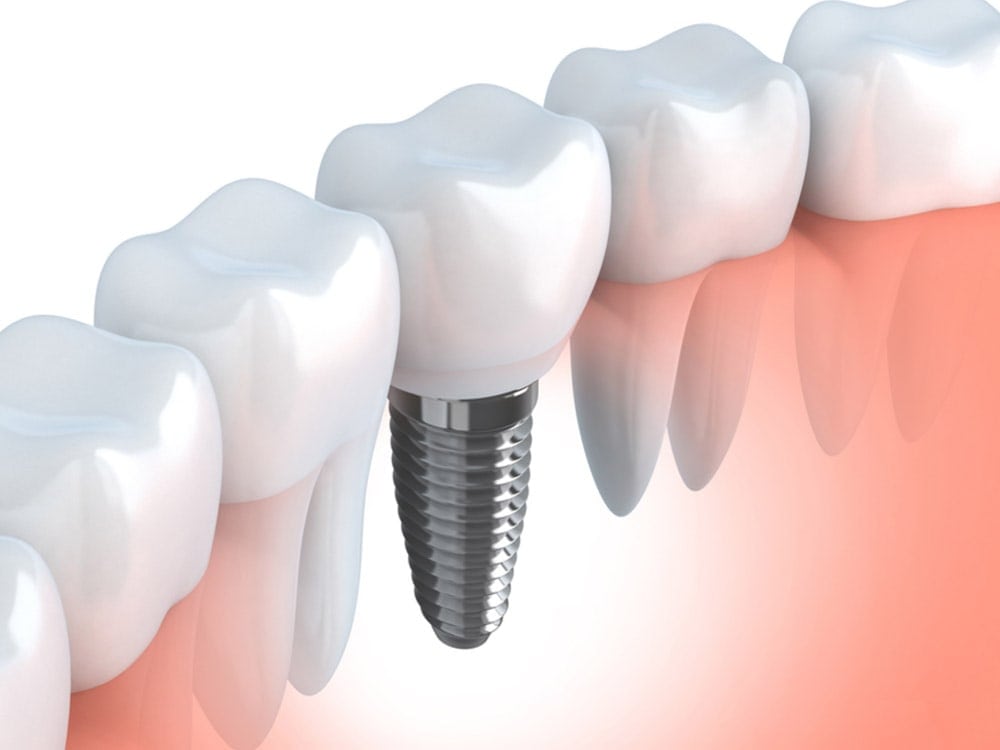
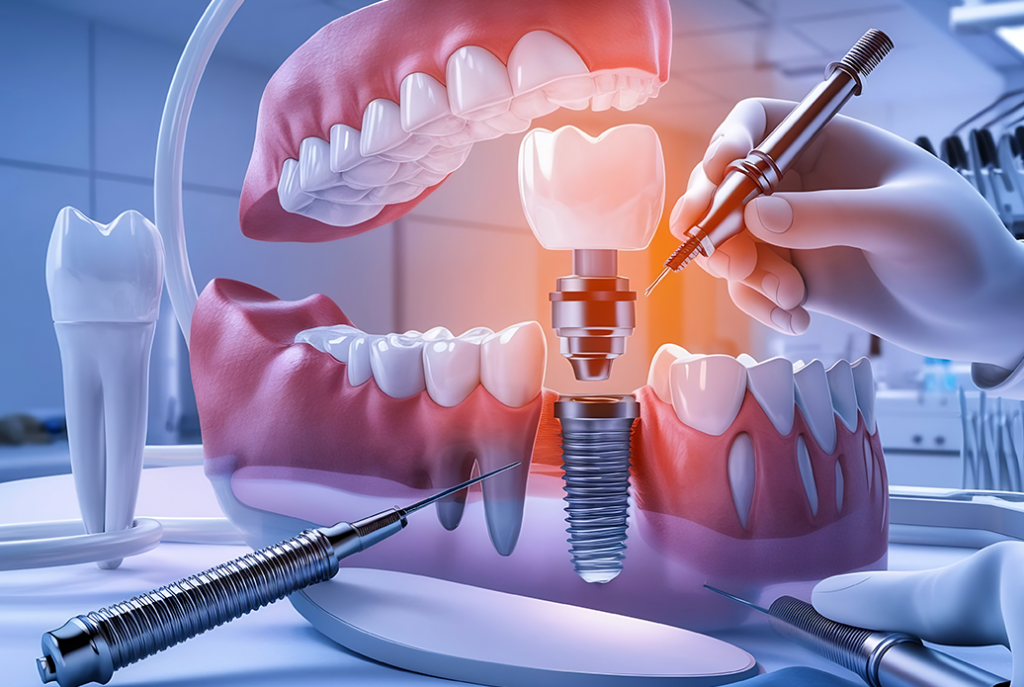
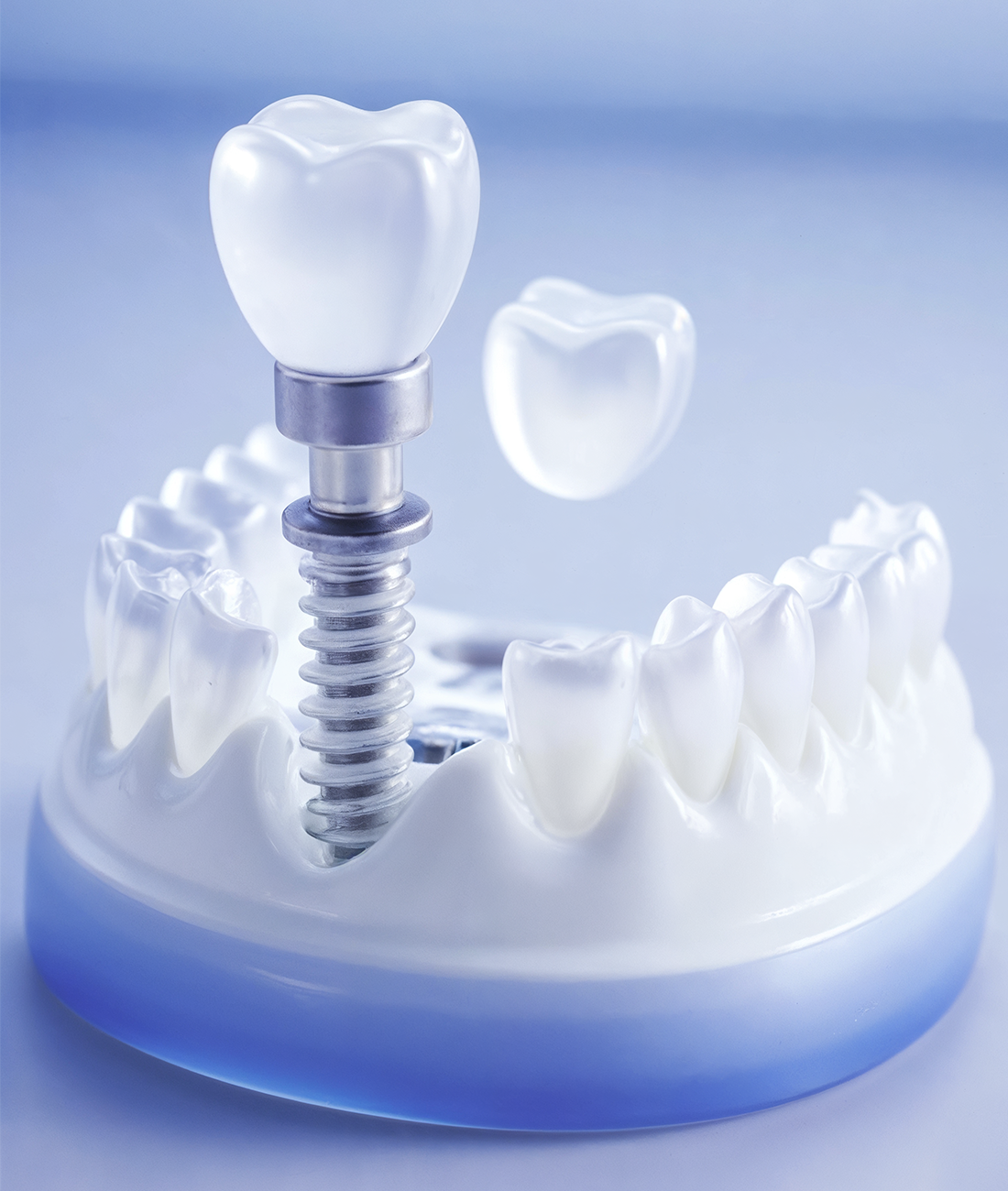
Dental implants serve as tooth root substitutes comprised of titanium metal anchors. Your dentist will surgically place the implant into your jawbone. Next, small posts called abutments are attached to the implant. The posts protrude through your gums and provide stable anchors for replacement teeth (crowns).
Placing dental implants will require two surgical procedures. During the first surgical procedure, your dentist will place the implants in your jawbone. The implants are underneath the surface of the gums, during the first three to six months’ post-surgery. The implants fuse with your jawbone progressively. You will wear temporary crowns or dentures and follow a soft diet during this stage.
Once the implant has integrated with your jawbone and has healed, the second phase of the procedure begins. Your dentist will make a new incision to reveal the dental implant and then attach the abutment to the implant. Your dentist will also take impressions of your teeth to createa tooth that matches your bite. Lastly, your dentist will attach the replacement tooth (crown) to the abutment.
Guided Implant Placement Surgery Process
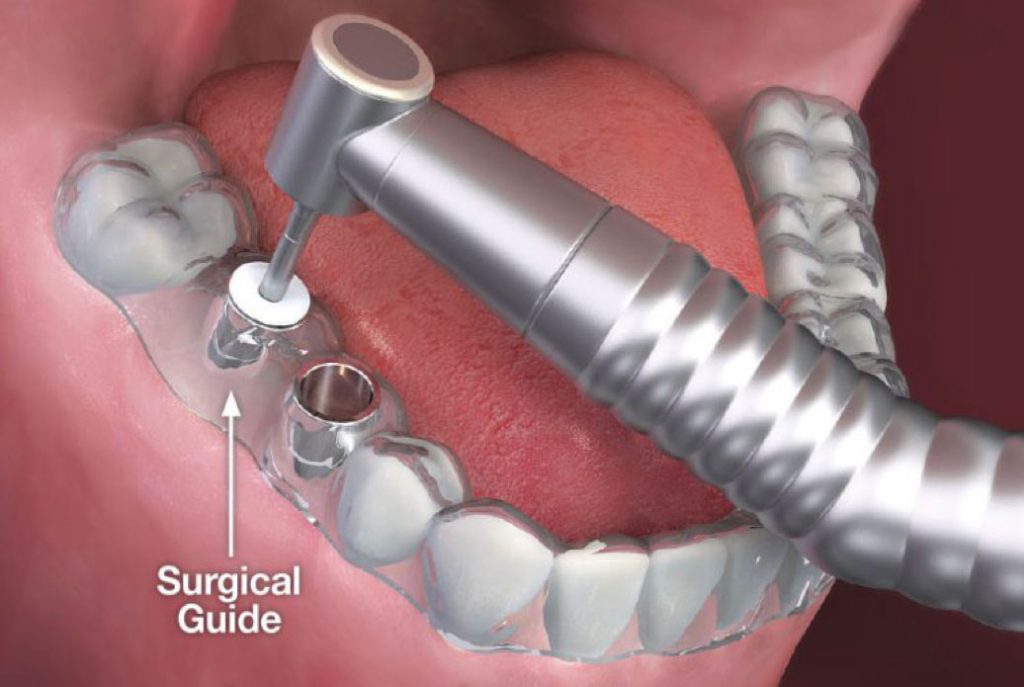
The surgery begins with a computed tomography (CT) image of your dental arch and iTero is used to get digital scans of the soft tissue and gums. The technology then creates an overlay which includes the new dental implants. This allows your dentist to visualize and manipulate images of your jawbone and surrounding tissues to place the implants in their exact locations. Ultimately, computer-guided surgery enables your dentist to plan the most accurate treatment approach. You can experience fewer complications, faster recovery times, and a fantastic smile.
South Trail Crossing Dental in SE Calgary, McKenzie Towne, offers dental implants near you. Schedule your consultation today!